Food Manufacturing
Workwear is part of your hygiene chain
Lab coats, mob caps, aprons and cold-store gear for food production sites. Run on segregated loads with soiled and clean kept apart, because in a high-care environment the laundry is not a support service — it is part of the control.
- Segregated
- Soiled and clean kept apart
- Traceable
- Batch-tracked in and out
- Per contract
- Priced on headcount and zone

Food Manufacturing for London
High-Care Lab CoatsFood Production WorkwearMob Caps & SnoodsCold Store GearZone-Coded ApronsBakery WorkwearButchery WhitesTechnical Wipers
- 06:00–01:00
- Collection window, Mon–Sat
- 1,034
- Areas on the round
- Own fleet
- No third-party courier
- Since 2009
- Company no. 16234834
Served from Wembley HA9 0YJ
Venue figures are indicative · data compiled 2026-08-27
What goes wrong
The risk is the journey, not the wash
Getting a garment clean is the easy part. Keeping it clean between the machine and the changing room is where food-sector laundry actually succeeds or fails.
-
Clean and soiled meeting
If clean garments share space, air or vehicles with soiled ones at any point, the wash was beside the point. Separation has to hold from collection to delivery.
-
Zones getting mixed
Garments from a raw area returning into a high-care zone is exactly what colour coding exists to prevent — and it only works if the laundry preserves it rather than sorting by size.
-
Nothing is traceable
When an auditor asks where a specific batch went, 'it went to the laundry' is not an answer. Items need to be accounted for in and out.
How it runs
Five steps, and separation runs through all of them
The sequence exists to keep soiled and clean apart at every point, not just in the machine.
-
Scope the zones
Which areas, which garments, what colour coding you already run and what your scheme requires. That defines the whole contract — there is no standard food package.
Before the first collection
-
Segregated collection
Soiled garments collected in supplied containers and kept separate from clean stock on the van, not just at the plant.
Soiled kept apart
-
Thermal wash
Run on their own loads at controlled temperatures, with garments from different zones kept apart through the process rather than pooled and re-sorted.
By zone, never mixed
-
Inspect and pack
Checked for damage and missing fastenings — a missing stud is a foreign-body risk, not a cosmetic issue — then packed so garments stay clean in transit.
Protected after washing
-
Delivery and count
Delivered against a count, by zone, so what left and what returned reconcile.
Accounted in and out
Priced per contract on headcount, zone count and change frequency.
Standards
What we can evidence, and what we cannot
Food manufacturing is audited, and the honest position is this: we run segregated loads with zone separation, thermal washing, inspection for foreign-body risks and a count in and out. We can talk you through exactly how each of those works.
What we will not do is claim conformance to a named scheme on a web page. If your customers require a specific certification or audit evidence from suppliers, raise it before you sign — so we can scope it, or tell you plainly that we are not the right supplier for a Grade A site.
- Segregated
- Soiled and clean apart, van onwards
- By zone
- Colour coding preserved through the process
- Visits welcome
- Audit the plant before you commit
Production plant: Unit 7-13, Metro Trading Centre, Wembley HA9 0YJ.
What we handle
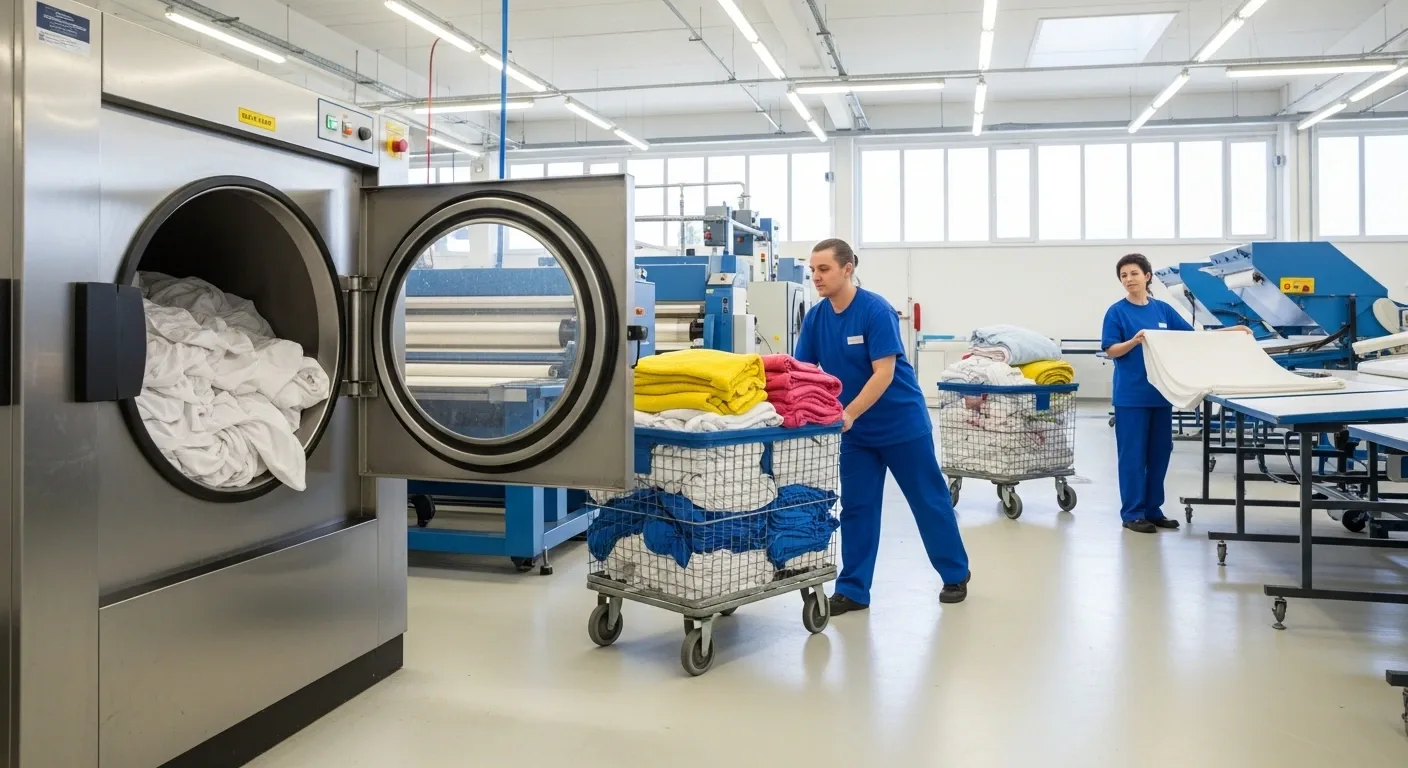
Garment types we run for food production. If yours is not here, ask — the question is the zone and the risk.
- Per contract
- No published per-item rate
- Own fleet
- Collected by us
- High-care coats and whites Zone-coded, inspected for fastenings View the range
-
 Mob caps, snoods and aprons High turnover, high volume View the range
 -
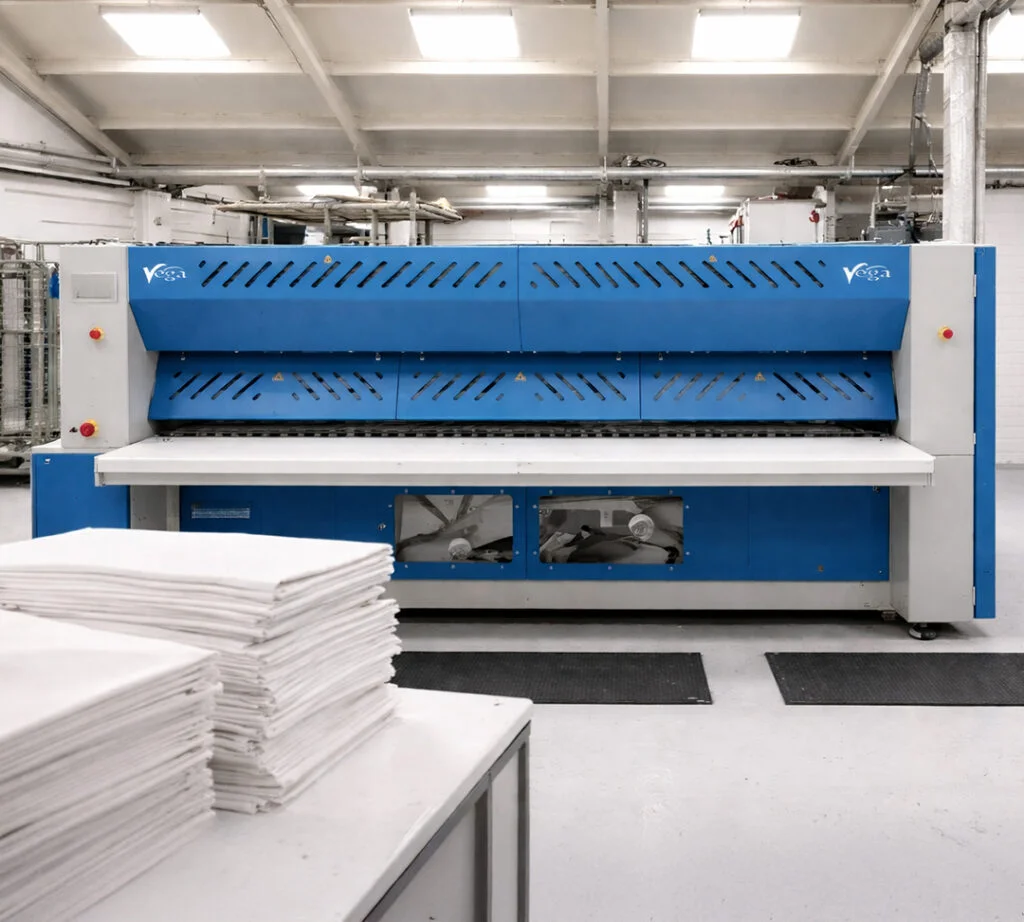 Cold store clothing Insulated layers, chilled and frozen areas View the range
 - Technical and zone cloths Colour-coded per area View the range
Non-food workwear on the same site runs under industrial workwear, on the same account but not in the same loads.
Why sites bring it in from outside
The case against on-site laundry in a food environment.
- Separation
On-site machines rarely separate properly
A laundry room in a production building usually cannot keep soiled and clean genuinely apart — one door, one air space, one person carrying both.
- Records
Nobody logs a domestic machine
Traceability means a record of what went in and came out. That is a process, not a machine, and it is the part on-site laundry almost never has.
- Capacity
Peaks break on-site washing
Volume in food production is not steady. A machine sized for a normal week fails in a busy one, and that is when corners get cut.
If you already have a working on-site setup, we will say so rather than argue with it.
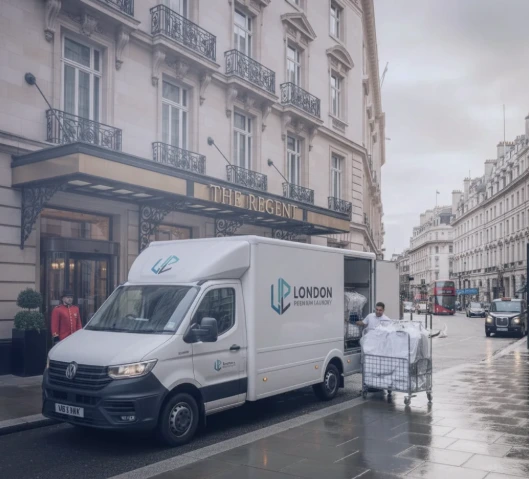
Collected and returned on our own vans, on a fixed round.
What accounts say
-
LP Laundry has been an absolute game-changer for our 45-room boutique hotel. Turnaround on our bed linens and heavy plush towels is inside 24 hours without a single delay. We could not be happier with the crisp, immaculate finish.
Charlotte Vance Front of House & Accommodation Manager · 45-room boutique hotel -
Table presentation is everything in Mayfair. They handle our heavy cotton damask tablecloths and chef whites with real precision — stains vanish and the starch finish is always spot on. The daily collection has never let us down.
Mateo Rossi Restaurant General Manager · Fine dining restaurant -
Running a high-end spa means going through hundreds of bathrobes and spa towels daily. Our rotation stays fully stocked with exceptionally soft, hygienically pristine textiles. Guest comfort has noticeably improved since we switched.
Siobhan O'Connor Spa Operations Director · Luxury health club & spa -
Our members expect fresh sweat towels immediately after back-to-back spinning classes. They handle our daily volume seamlessly, and I would single out the punctuality and the clean, long-lasting scent of the eco-friendly detergents.
Marcus Thorne Studio Manager · Boutique fitness studio -
In clinical and aesthetic practice, hygiene standards have to meet rigorous compliance. High-temperature sanitised gowns, drapes and bed covers arrive reliably every week. I trust their quality control completely.
Dr Elena Rostova Clinic Director · Private healthcare clinic -
Running a busy dining room alongside eight letting rooms needs a versatile laundry partner. Kitchen aprons, table runners and bed sheets all go in one collection, and the seven-day pickup schedule flexes around us.
Liam Gallagher Operations & Pub Manager · Gastro pub with rooms -
For high-end short-stay apartments, guest reviews live and die by linen quality. We get hotel-grade crispness that consistently earns us five-star cleanliness ratings, and the communication lines are short when something needs resolving.
Beatrice Dupont Head of Housekeeping · Luxury serviced apartments -
We use dozens of salon towels and client gowns every day. Stubborn hair dye and product stains come out effortlessly and our capes still look new. They are an indispensable part of the daily flow here.
Chloe St. Laurent Salon Owner & Manager · Hair & beauty salon
Food manufacturing laundry, answered
Do you work with food production sites?
Yes: high-care coats and whites, mob caps and snoods, aprons, cold-store clothing and zone-coded cloths.
Everything runs on segregated loads with zone separation preserved through the process rather than re-sorted at the end.
How do you keep soiled and clean apart?
From the van onwards, not just in the machine.
Soiled garments travel in supplied containers, kept apart from clean stock in transit and through the plant. Getting a garment clean and then carrying it back next to a soiled one defeats the whole exercise.
Can you provide traceability records?
Items are counted in and out by zone, so deliveries and returns reconcile.
What an auditor wants varies by scheme and by customer — tell us what yours asks for before a contract, so we can either meet it or say we cannot.
Is it better than washing on site?
Usually — for separation, records and peak capacity. Most on-site laundry rooms cannot keep soiled and clean genuinely apart, do not log anything, and fail in a busy week.
But if you already have a setup that genuinely works, we will say so rather than argue with it.
Are you BRCGS or HACCP certified?
Here is the straight answer: we run segregated loads with zone separation, thermal washing, inspection for foreign-body risks and a count in and out — and we will walk you through each of those.
We do not claim conformance to a named scheme on a web page. If your customers require specific certification or supplier audit evidence, raise it before you sign so we can scope it — or tell you plainly that we are not the right supplier for a Grade A site.
Do you preserve our colour coding?
Yes — zone separation is preserved through the process.
Colour coding only works if the laundry maintains it. Pooling garments and re-sorting them by size at the end is exactly the failure the coding exists to prevent.
What about missing studs or damaged garments?
Pulled and reported, never quietly returned.
A missing stud on a food-site garment is a foreign-body risk, not a cosmetic issue — which is why inspection is a named step rather than a general intention.
How often do you collect?
Whatever the site needs, inside the 06:00–01:00 window Monday to Saturday.
Food production commonly runs daily or several times a week, because garment turnover is high and storing soiled workwear on site is the thing everyone is trying to avoid.
Still not answered?
Ask us directlyHigh-care done properly wastes less
Because the alternative to a laundered garment is a disposable one.
- Reusable coats and aprons replace single-use alternatives in most areas where they are permitted.
- Garments are inspected and repaired where safe rather than discarded for a missing fastening.
- Collections ride existing rounds — no dedicated vehicle.
- Washing at plant scale uses less water and power per garment than on-site machines.
- Reusable
- In place of disposables where permitted
- Repaired
- Where it is safe to do so
- Same round
- No extra vehicle
- Wembley
- One plant, no sub-contracting
Where a claim is not measurable, it is not made.

Tell us your zones
Areas, headcount and what your customers audit you against. That is enough to scope it.
- Segregated from collection, not just in the machine
- Zone coding preserved through the process
- We will say plainly what we can and cannot evidence
Or call 01224 024759
Thank you — your enquiry is on its way.
We reply to every enquiry within one working day, usually sooner. If it is urgent, call us on 01224 024759.