Chat to us
HomeQuote
Services
Products
Pricing
Our Company
Locations
Blog

Our Company · London & the Home Counties

Commercial Laundry Since 2009

Two plants we own and run, fixed rounds across 1,034 areas, and one classification per textile rather than one wash for everything. This page is the whole company in one place — the story, the process, the standards, the sustainability programme and how a contract account starts.

  • 2009Founded in London
  • 2Plants, both ours
  • 1,034Areas we collect from
  • 7 daysCollection days
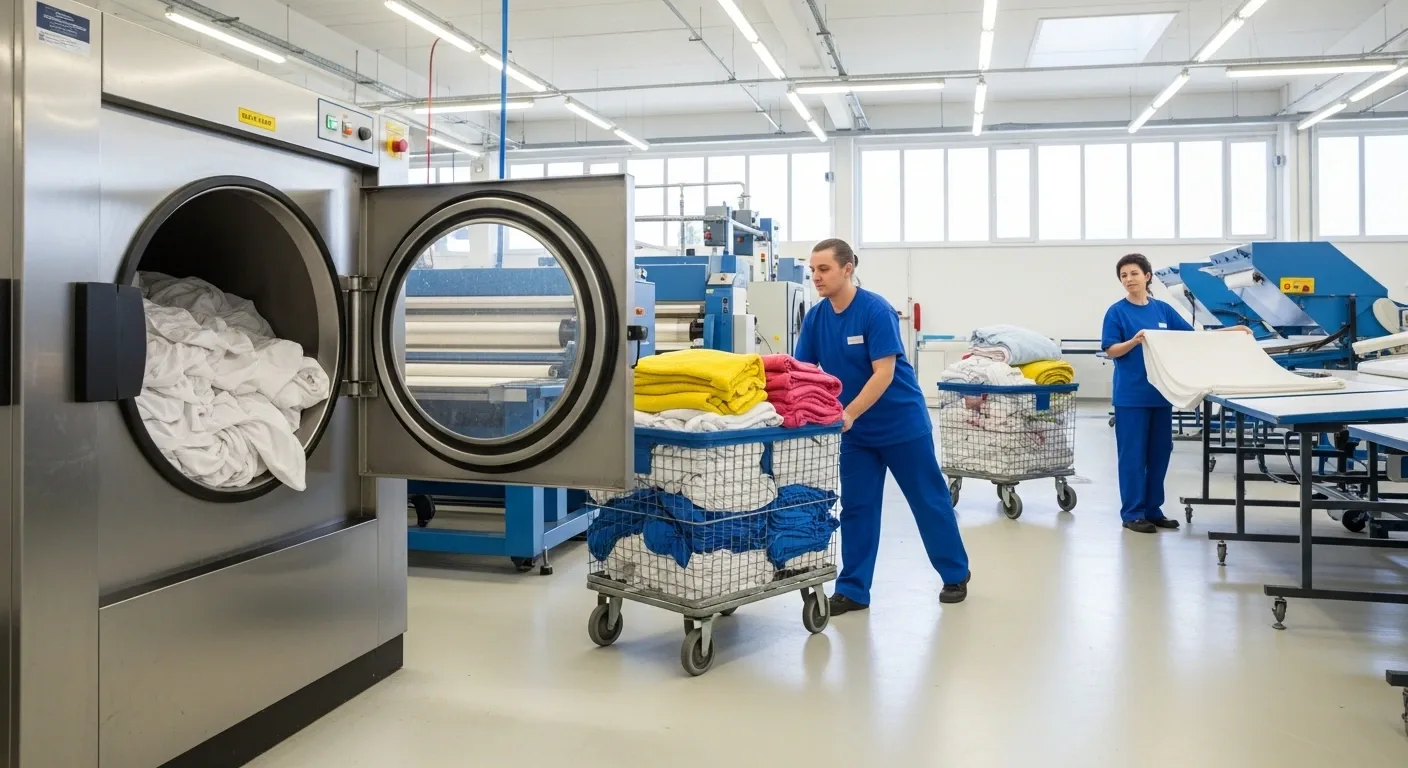
Inside the LP Laundry production plant in Wembley

Our story

How the company got here

Carried across from the original our-story page. These are the four milestones it recorded.

  1. 2009
    Founded

    LP Laundry is founded, serving a select group of boutique hotels and restaurants across London.

  2. 2012
    A larger plant

    Demand for high-volume work outgrew the original site, so we moved into a bigger facility — more capacity, and the equipment to run separate classifications properly.

  3. 2015
    The eco programme

    The sustainability programme starts: water recovery, energy efficiency and a move away from harsh chemistry. It is the reason most of the numbers further down this page exist.

  4. 2021
    Beyond London

    Rounds extend out of London into the Home Counties. Coverage is now 1,034 areas, up to roughly 100 miles from the plant.

Our plants

Two plants, and we own both

Most of what looks like a laundry company is a broker: it collects, hands the work to somebody else's plant, and delivers it back. We do not. There are two buildings between your textiles and clean stock, and both are ours.

Washing floor at the Wembley production plant
Wembley — the production plant Unit 7-13, Metro Trading Centre, Wembley HA9 0YJ

Where the washing happens. Separate classifications run on separate machines here, which is what allows chef whites, washroom towels and table linen to be washed properly rather than together. It is also the point every fixed round is measured from — the mileage quoted on each area page is the distance from this building.

Harrow — the second site 1B Chantry Place, Harrow HA3 6NY

Our second site, and the registered address on the Google Business listing. It carries overflow and shorter-turnaround work, which is what keeps a same-week deadline possible when Wembley is at capacity.

Nothing is subcontracted

The practical difference is accountability. When a delivery is wrong we can find the item, because it never left our two buildings — that is what the RFID tracking further up this page is for. A broker has to ask somebody else.

What we hold to

Three things we hold to

Quality and precision

One classification per textile. Chef whites, washroom towels and table linen do not share a wash, because run together they all come back grey.

A named account manager

Not a ticket queue. Someone who knows your building, your par levels and your delivery window, so a change is a phone call rather than a renegotiation.

Innovation and sustainability

Water recovery, an electric fleet in central London, and stock replaced on wear rather than on appearance.

Classifications

What "one classification per textile" means

It is the sentence this whole company runs on, and it is worth being concrete about. A classification is a wash: its own temperature, its own chemistry, its own machine time. Run two soils together and both come back grey — that is not a quality opinion, it is what happens.

Bed linen

Sheets, duvet covers, pillowcases. Pressed and returned ready to put on.

Towelling

Bath, hand, pool and gym towels. Rinsed hard, because detergent residue is what stops a towel absorbing.

Chef whites & kitchen

Jackets, trousers, aprons, cloths. Grease is what greys everything it travels with, so it never shares a drum.

Table linen

Cloths and napkins, finished for service rather than folded flat.

Washroom & end-of-trip

Roller and hand towels, and shower towels, which carry body oil and need the gym classification.

Bulky bedding

Duvets, pillows, toppers. Feather and synthetic run separately — down carries oils polyester does not.

Dry cleaning

Wool, silk and tailoring, on solvent rather than water.

Workwear & PPE

Industrial garments, on their own compliance requirements.

Our process

Seven steps, every load

From the original cleaning-process page. Collection and return sit either side of it on a fixed round.

  1. 1
    Collection and initial sorting

    Sorted by fabric and classification at the plant, not in the van.

  2. 2
    Pre-treatment and stain removal

    Treated before the wash, which is the only point it reliably works.

  3. 3
    Precision washing and sanitisation

    Temperature and chemistry set per classification, not per machine.

  4. 4
    Triple rinse and extraction

    Rinsing is what removes detergent residue — the thing that makes towels stop absorbing.

  5. 5
    Advanced drying and conditioning

    Dried at a temperature chosen for the fabric, so it comes back soft rather than baked.

  6. 6
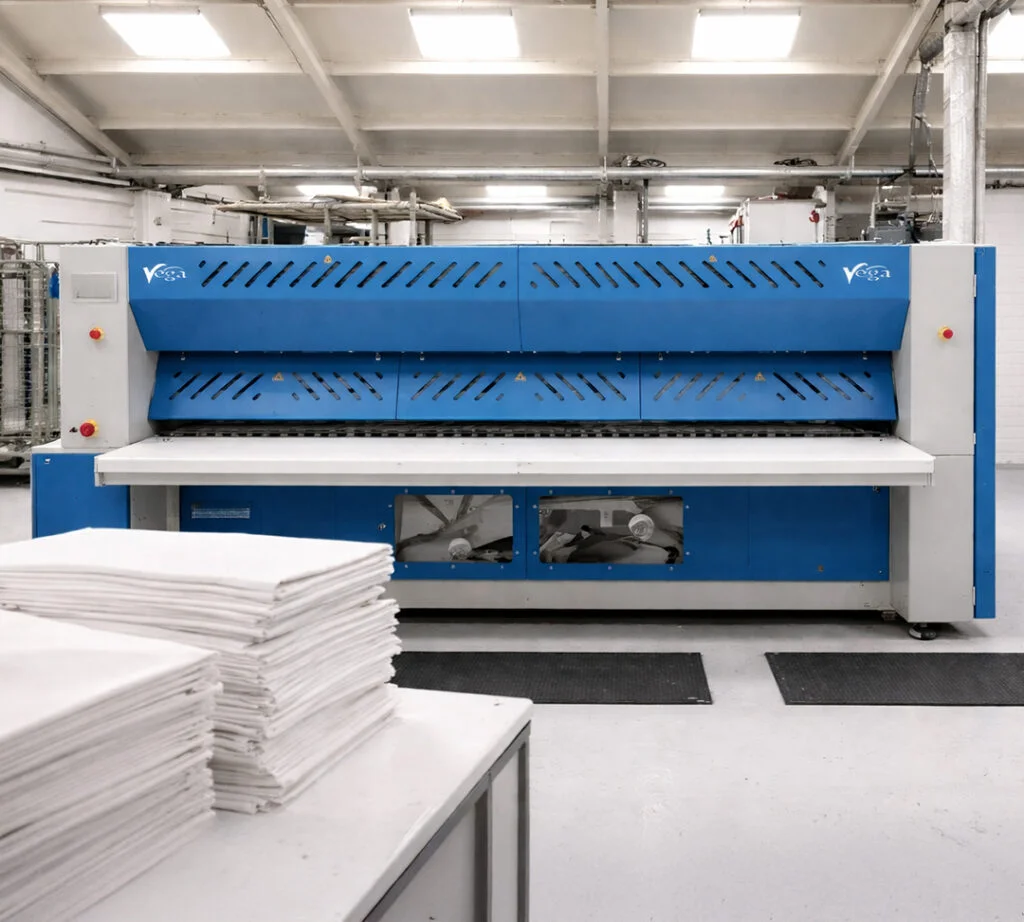
    Finishing and pressing

    Pressed or folded to the spec the account was set up on.

  7. 7
    Final quality control and dispatch

    Checked before it leaves, then back on your round.

Standards

Standards and traceability

ISO 9001:2015

Quality management certification.

FSA & HACCP

Food-safety standards, which is what kitchen and catering textiles are handled under.

Multi-point inspections

Checked at more than one stage, not only before dispatch.

RFID traceability

Stock tracked through the plant, so a missing item can be found rather than argued about.

Coverage

How the coverage actually works

1,034 areas, up to roughly 100 miles from the Wembley plant. That is not a marketing radius — every area page on this site carries its own mileage, measured from that building, and its own collection days.

Fixed rounds, not ad-hoc trips

A round is a route we already run. Your collection sits on one, which is why there is no per-visit delivery charge and why a relief driver inherits the window with the route rather than learning it.

Days agreed per account

Set at the walk-round, not assigned. Out-of-hours where a building needs it — offices and hotels usually do, and it is the difference between a delivery reaching the cupboard and reaching reception.

Seven days a week

Monday to Saturday 06:00-01:00 and Sunday 10:00-22:00. The early start is what makes a pre-service delivery possible for restaurants and the late finish is what catches a hotel's evening changeover.

No minimum order, anywhere

A single bag and a fifty-bed hotel are both ordinary accounts. A minimum order is how a supplier makes small customers uneconomic without saying so.

Sustainability

The sustainability programme

Started in 2015. Four pillars, and the figures the old page published against them.

Water recovery and energy systems at the plant
Water conservation

Recovery and reuse across the wash cycle.

Renewable energy

Plant electricity on a renewable supply.

Eco-friendly products

Biodegradable detergents and ozone treatment in place of harsher chemistry.

Green fleet

Transitioning the London rounds to electric.

Contract care

How a contract account starts

Four steps, from the original contract-care page. Nothing here needs you to be out of your current agreement first.

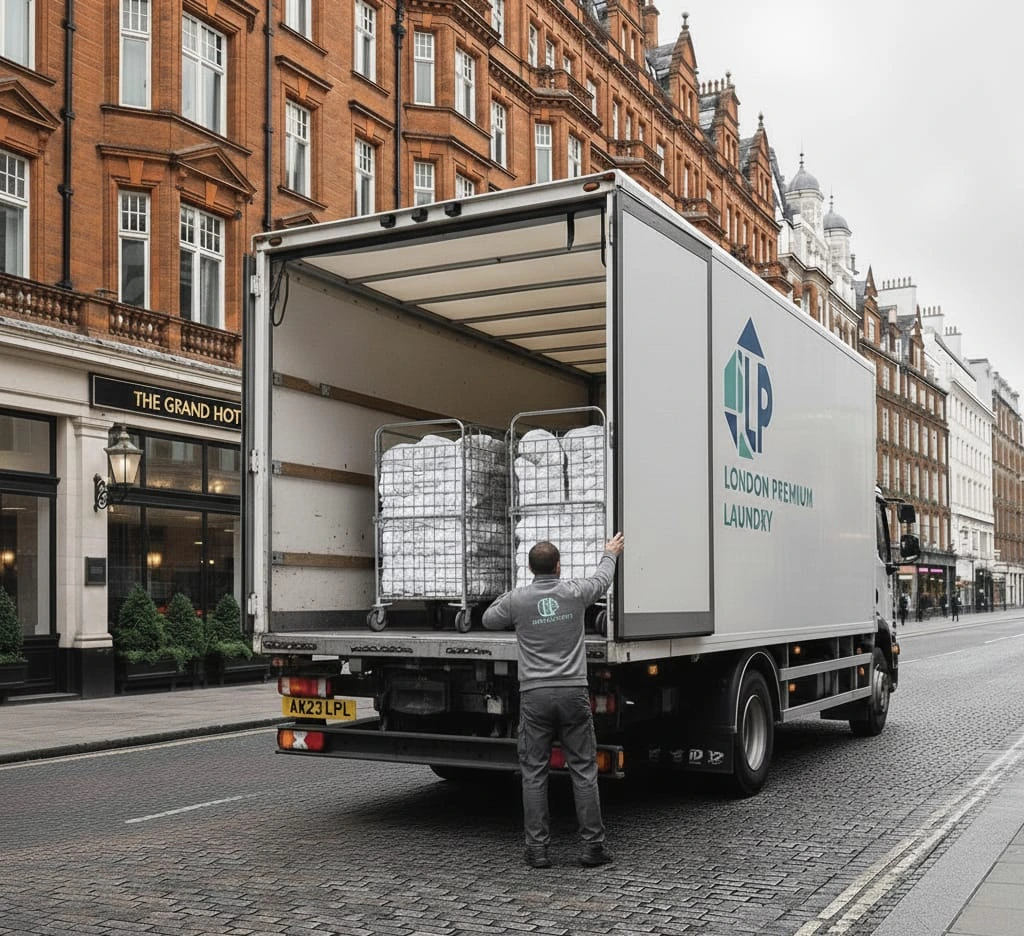
A fixed collection round leaving the plant
  1. 1
    Consultation and assessment

    A walk-round to count what you actually hold and use, rather than quoting off floor area.

  2. 2
    A written proposal

    Priced per line, showing hire against wash-only so you can see the gap.

  3. 3
    Onboarding

    Stock arrives before the outgoing supplier is stood down, so nothing runs out during the switch.

  4. 4
    Ongoing service

    Par levels reset after the first month against real usage, not the opening estimate.

What we won't do

What we will not take on

A supplier that says yes to everything says yes to things it cannot do. These are the ones we turn down before you book rather than after we have your stock.

Memory foam toppers

They cannot be wet-washed. Nothing changes that, and anyone who says otherwise is about to ruin one.

Anything with a split seam

A seam that opens in a commercial drum empties a duvet into the machine. It has to be repaired first.

Same-day inside 10am-3pm

We do not turn linen around inside that window. For a changeover the workable answer is three sets per bed — one in use, one with us, one spare — not a promise we would miss.

Electric blankets

For the obvious reason.

Who we serve

Who we serve

Every sector below has its own service page with prices and detail.

By the numbers

The company in figures

Everything here is either counted from this site's own data or was supplied by the business. The sustainability percentages further up are the ones still awaiting verification.

  • 2009 Founded in London
  • 2 Plants, both owned and run by us
  • 1,034 Areas on a fixed round
  • ~100 mi Furthest round from Wembley
  • 13 Services with their own page
  • 213 Published prices, all on one page
  • 7 days Collection days a week
  • 06:00 Earliest collection, Mon-Sat

Questions

Questions about the company

Do you actually own your plants, or do you subcontract?

We own and run both. This is the question worth asking any laundry supplier, because a large share of the trade is brokerage.

  • Wembley is the production plant — where the washing happens and where every round's mileage is measured from.
  • Harrow is the second site, and the registered address on the Google Business listing.
  • Nothing goes to a third party in between. The practical difference is that a missing item can be found, because it never left our two buildings.
  • A broker has to ask somebody else — which is why a brokered account gets vaguer the moment something goes wrong.
How far do you actually collect?

1,034 areas, up to roughly 100 miles from Wembley. Not a radius on a map — every area page carries its own measured distance and its own collection days.

  • Fixed rounds, so your collection sits on a route we already run rather than a trip made for you.
  • That is why there is no per-visit delivery charge on a commercial account.
  • Days are agreed at the walk-round, not assigned, and out-of-hours where the building needs it.
  • Further out than that, ask — it may still work on an existing route.
What does "one classification per textile" actually mean?

That each type of textile gets its own wash — temperature, chemistry and machine time — rather than everything sharing one cycle.

  • Eight classifications in practice: bed linen, towelling, chef whites and kitchen, table linen, washroom and end-of-trip, bulky bedding, dry cleaning, and workwear.
  • Grease is the reason. Kitchen soil greys everything it travels with, so it never shares a drum with bed linen.
  • Grey stock is usually a wash problem, not an age problem. If you are replacing towels every few months, the cycle is wrong.
  • It is also why the plant matters. Running eight classifications properly needs the machines to do it on.
Are we tied into a contract?

No long-term tie-in and no exit fee on the standard rate.

  • Discounts are published, not negotiated — 15% on a six-month agreement, 25% on twelve. Frequency discounts of 5% fortnightly and 10% daily stack on top.
  • Plenty of accounts stay on the standard rate deliberately, and that is a fine answer.
  • Nothing needs you to be out of your current agreement first. The walk-round and the quote commit you to nothing.
  • Stock arrives before the old supplier is stood down, so nothing runs out during a switch.
What are your hours, and can you deliver outside them?

Monday to Saturday 06:00 to 01:00, and Sunday 10:00 to 22:00.

  • The 06:00 start is what makes a pre-service delivery possible for a restaurant or a hotel breakfast.
  • The 01:00 finish is what catches an evening changeover without it waiting until the next day.
  • Offices and managed buildings are usually served out of hours, straight to the cupboard rather than to reception.
  • Goods-lift windows in managed buildings we arrange with the FM rather than passing it back to you.
What will you refuse to take?

A short list, and we say so before you book rather than after we have your stock.

  • Memory foam toppers cannot be wet-washed.
  • Anything with a split seam has to be repaired first — a seam that opens in a commercial drum empties a duvet into the machine.
  • Same-day turnaround inside a 10am-to-3pm window. For a changeover the workable answer is three sets per bed, not a promise we would miss.
  • Electric blankets, for the obvious reason.

Talk to someone who knows the round

Tell us the sector and rough volume and we will come back with real figures — not a callback to qualify you first.

Company details, opening hours and both plant addresses are on the contact page.

Where we run

London and the Home Counties, area by area

See all 1,034 areas

Fixed rounds across 1,034 areas. Every one has its own page with collection days, distance from the Wembley plant and the services that run there.

Showing 32 of 1,034 areas — see all 1,034 areas.

Request a quote

Tell us what you need priced

Real figures back, not a callback to qualify you first. No minimum order and no tie-in on the standard rate.

Contact Us
New Customer
Register Your Interest

Tailored solutions for your business

Main Office
01224 024759

Mon-Fri: 8AM - 6PM

Existing Customer
Customer Support

Direct help for current clients

Business Hours
Mon - Fri 8AM - 6PM
Saturday 9AM - 4PM
Sunday Closed

Message us

Tell us what you need

For commercial and household laundry across London and the South East. A person reads this — you will hear back within two working hours, Mon–Sat.