Care Home Laundry · London & the Home Counties
Care Home Linen Every Item Back To The Right Room
Residents’ personal clothing, bed linen and towels — collected, washed on the right classification and returned named, to the room it came from. Losing a resident’s own cardigan is not a laundry error, it is a distress call.
- 7 days
- Collection days
- 3,038
- Care homes in our coverage
- Named
- Every personal item

Care Home Laundry & Residents’ Clothing, London
Care Home Laundry LondonResidents’ Personal ClothingNamed Garment ReturnBed Linen & TowelsThermal DisinfectionBarrier WashingNursing & Dementia HomesNo Minimum Order
- 3,038
- care homes in our coverage
- 1,034
- areas on fixed rounds
- Named
- every personal item
- 7 days
- collection days a week
Coverage 1,034 areas across London and the Home Counties
Venue figures are indicative · data compiled Aug 2026
What goes wrong
A lost cardigan is a family complaint, not a laundry error
Care homes rarely change laundry supplier over price. They change after a run of weeks where residents’ own clothes came back to the wrong room, came back shrunk, or did not come back at all.
-
Personal clothing that goes astray
A resident’s own clothes are not stock. They are often the last things a family chose, and an unnamed jumper in a communal pile becomes a conversation nobody on your team wants to have.
-
One wash for everything
Soiled linen, personal clothing and kitchen textiles need separating and washing differently. Run together, the risk is not just a grey cardigan — it is the reason barrier washing exists.
-
An on-site laundry nobody has time to run
Most homes still wash in-house because outsourcing felt riskier. That is staff hours, floor space and machine maintenance spent on something that is not care.
How it works
Four steps from first call to first collection
Most of the work happens before the first collection. Get the naming and the segregation right and the laundry stops being something your care staff manage.
-
The count
We count beds, residents and how much personal clothing actually moves each week — which is the number in-house laundries almost always underestimate.
Beds and residents
-
The naming
Every resident’s garment is labelled before the first collection, and new admissions are labelled on the next visit rather than at the next review.
Before anything leaves
-
The segregation
Soiled, personal and general linen are separated at source using a system your staff agree to, because a system nobody follows is not a system.
Agreed with your team
-
The round
Your area already has a collection day. Personal clothing comes back on a known day so families and staff can rely on it.
Fixed days, agreed
Running more than one home? The same account manager covers all of them, on staggered days so no home is left short.
How it is processed
Care home laundry is a segregation problem before it is a wash
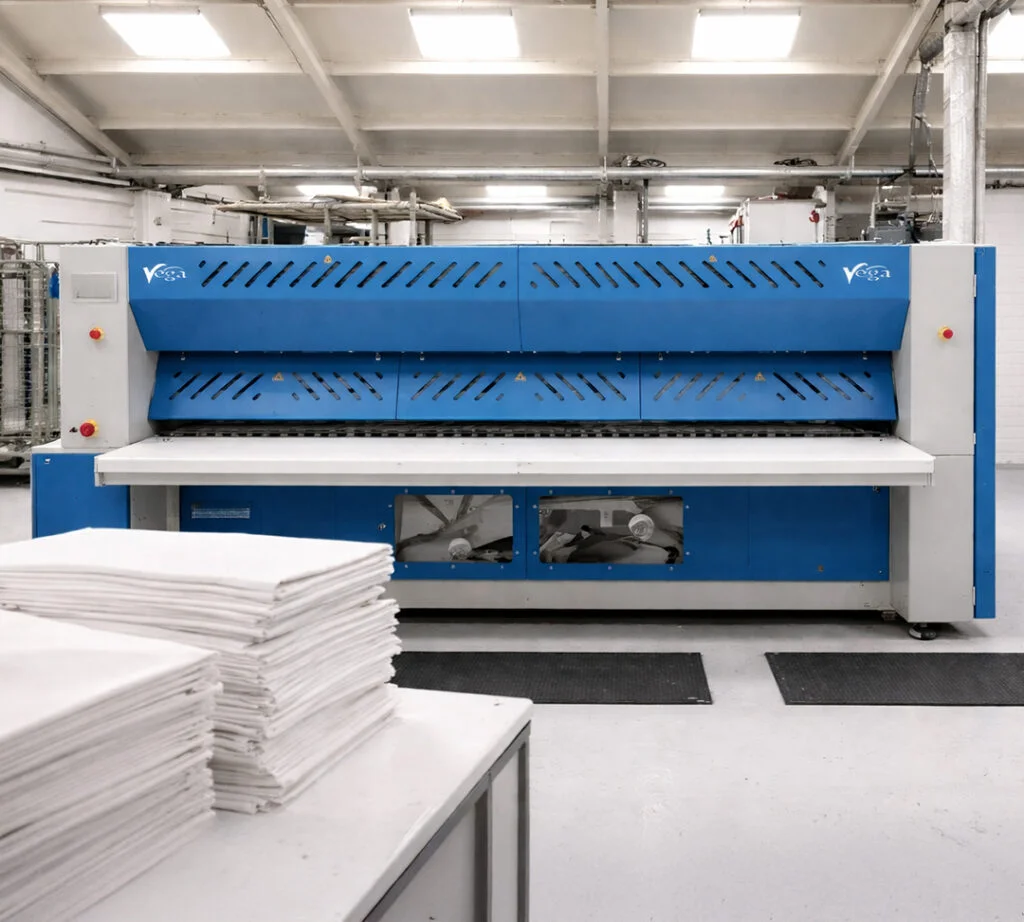
There are two buildings between your laundry and ours, and we own both: a production plant in Wembley and our Harrow site. Nothing is passed to a third party in between.
Care laundry is governed by BS EN 14065 and HTM 01-04, and both are about process rather than detergent: soiled, personal and general items kept apart, washed at a temperature that disinfects thermally, and handled so clean never meets dirty. Personal clothing runs on its own classification and is tracked by resident, not by bag.
- 2
- Plants, both ours
- Every load
- Temperature logged
- Named
- Personal items tracked
Personal clothing is tracked separately from linen at every stage.
Hire the linen, or we launder yours
Bed linen and towels on hire or wash-only. Residents’ personal clothing is always wash-only — it is theirs, and it comes back to them.
- Named
- Every personal item
- No minimum
- Order size
-
 Residents’ personal clothing Labelled, washed on its own classification, returned to the room it came from View the range
 -
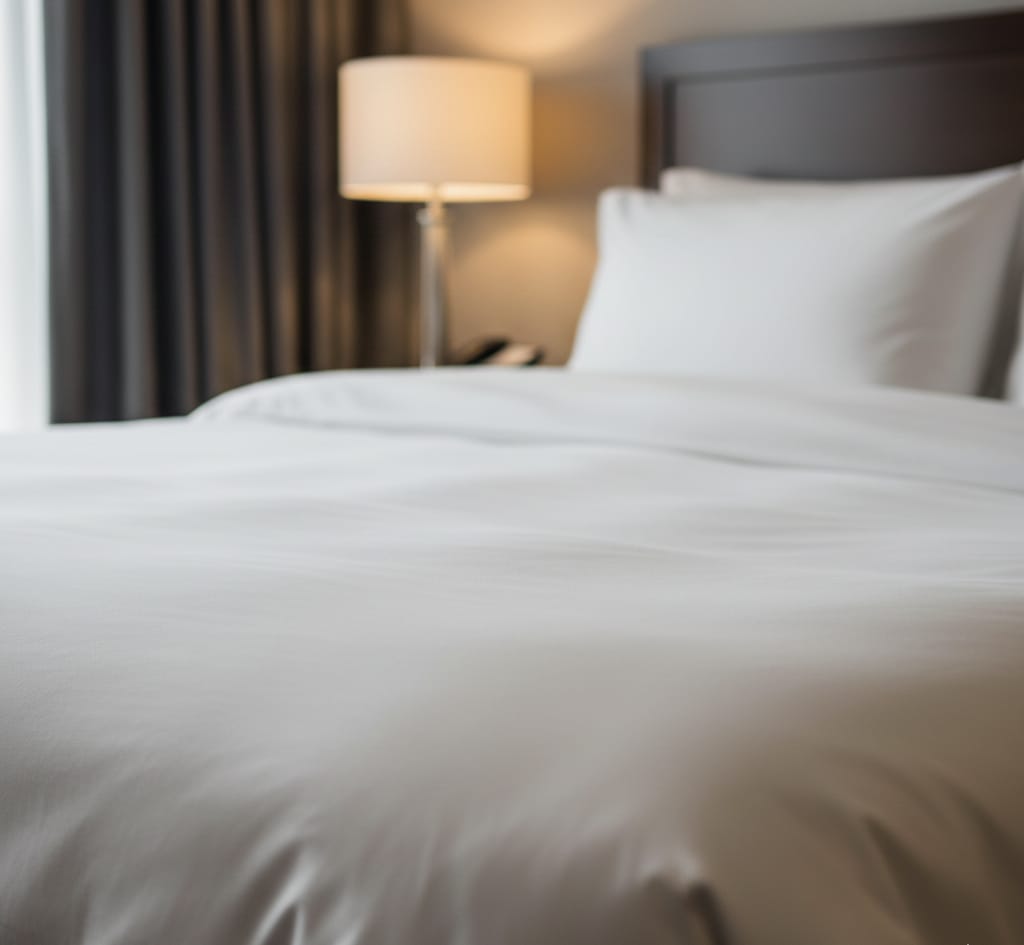
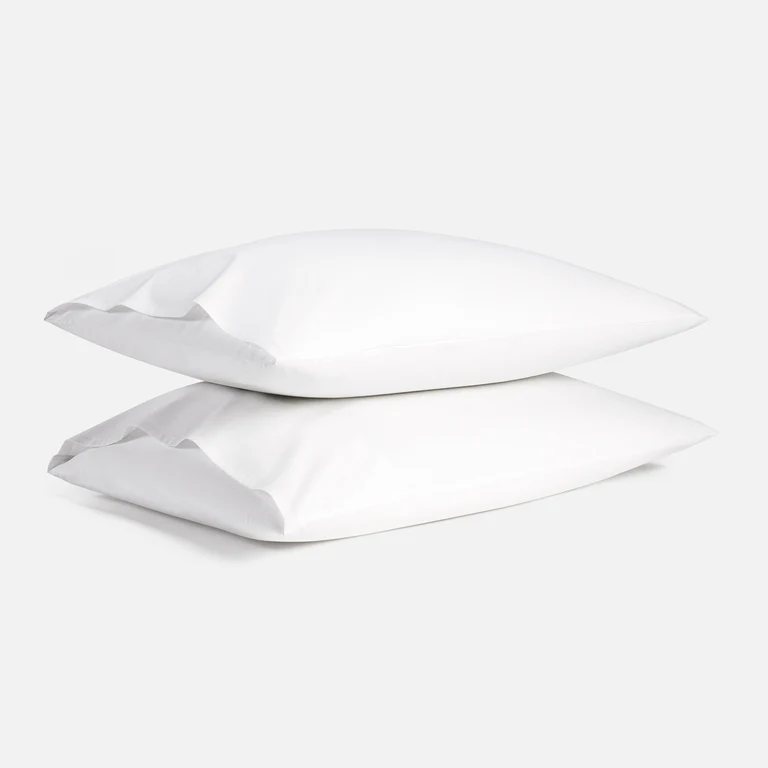 Bed linen Flat sheets, fitted sheets, duvet covers and pillowcases, hire or wash-only View the range
 -
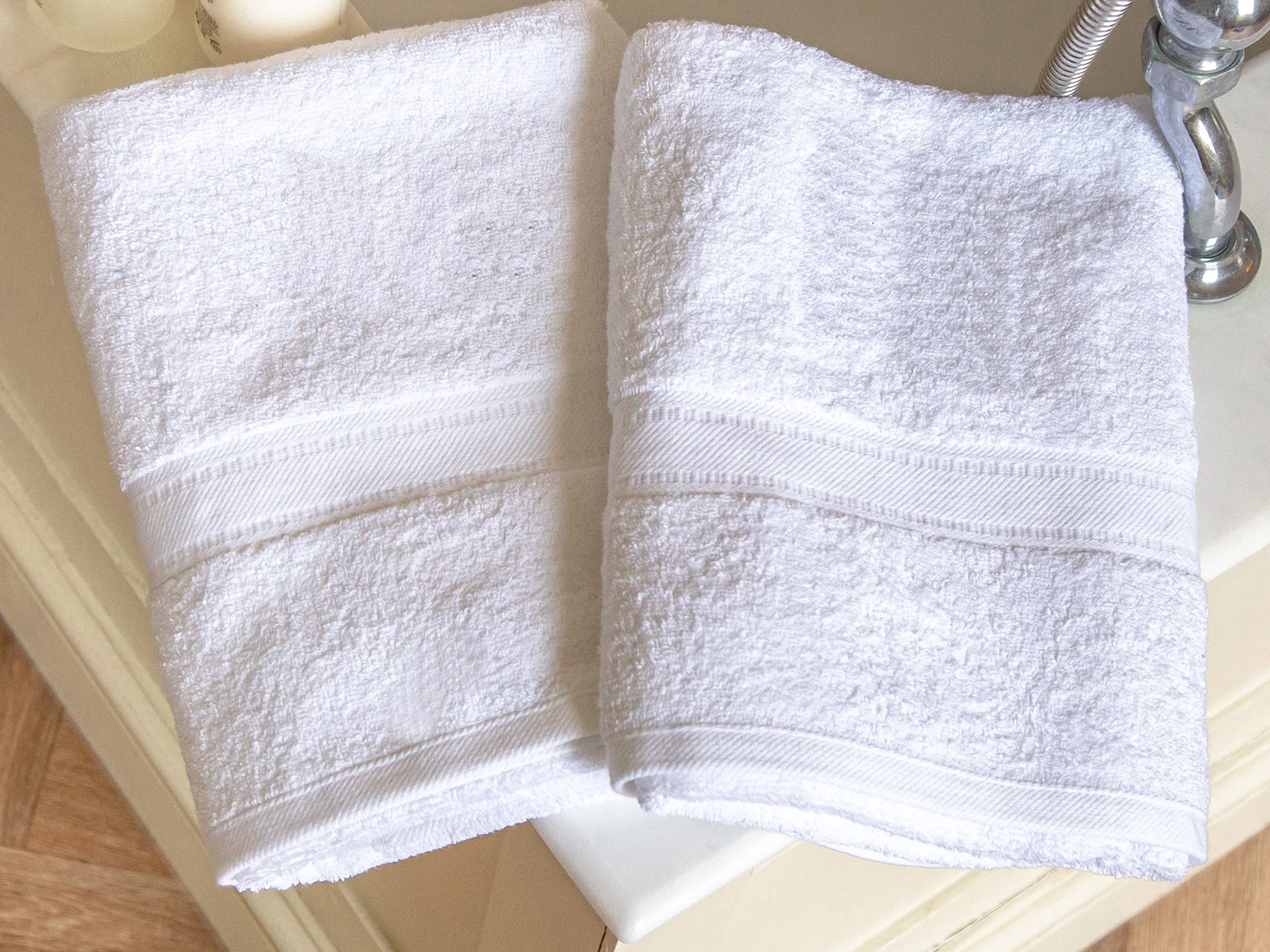 Towels & bath mats Bath and hand towels plus wet-area mats on a heavier classification View the range
 -
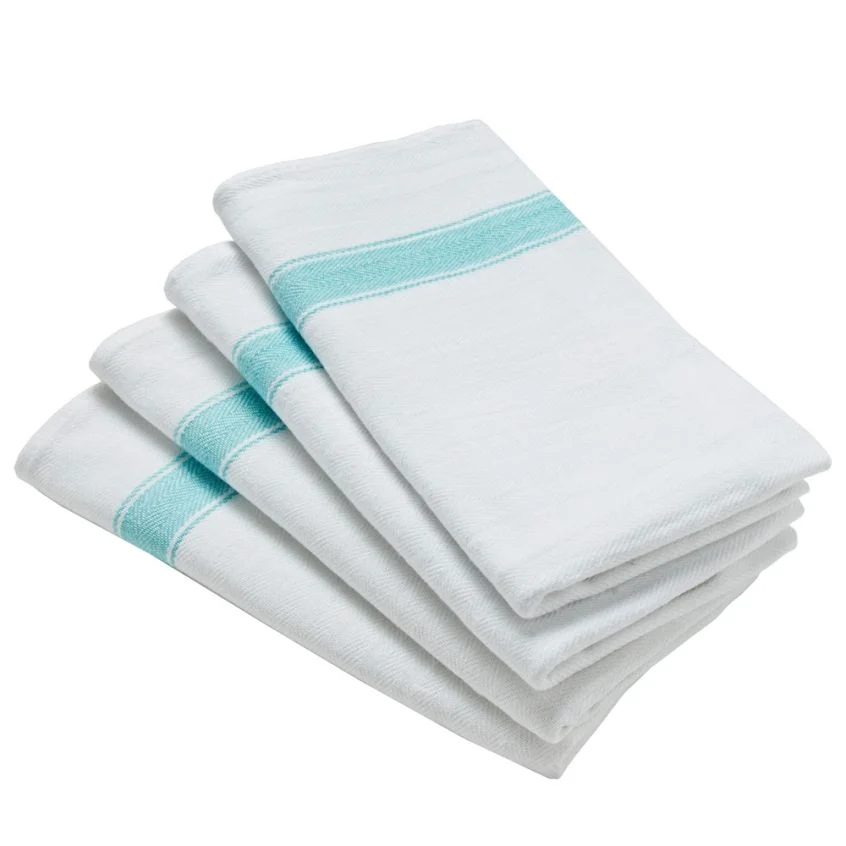 Kitchen & staff textiles Kitchen cloths, aprons and staff wear on the same collection View the range
Curtains and privacy screens are cleaned on the same account — see curtain cleaning.
Moving off an in-house laundry without a bad week
Most homes wash in-house because outsourcing once felt like the bigger risk. The switch is the part worth planning, not the decision.
- Before you commit
We count a real week, not a quiet one
An hour on site: bed count, personal clothing volume, and how many staff hours the in-house laundry actually absorbs. That last number is usually the surprise.
- The handover
Naming happens before the first collection
Every resident’s garment is labelled while your own laundry is still running, so nothing moves until it can be traced.
- After
The laundry room becomes floor space
Machines, drying space and the hours that went with them come back. Several homes use it for storage they were renting elsewhere.
Nothing here needs you to be out of contract first — the count and the quote cost nothing.
The week you switch is the week nobody notices.
What London businesses actually say
-
In clinical and aesthetic practice, hygiene standards have to meet rigorous compliance. High-temperature sanitised gowns, drapes and bed covers arrive reliably every week. I trust their quality control completely.
Dr Elena Rostova Clinic Director · Private healthcare clinic -
LP Laundry has been an absolute game-changer for our 45-room boutique hotel. Turnaround on our bed linens and heavy plush towels is inside 24 hours without a single delay. We could not be happier with the crisp, immaculate finish.
Charlotte Vance Front of House & Accommodation Manager · 45-room boutique hotel -
Table presentation is everything in Mayfair. They handle our heavy cotton damask tablecloths and chef whites with real precision — stains vanish and the starch finish is always spot on. The daily collection has never let us down.
Mateo Rossi Restaurant General Manager · Fine dining restaurant -
Running a high-end spa means going through hundreds of bathrobes and spa towels daily. Our rotation stays fully stocked with exceptionally soft, hygienically pristine textiles. Guest comfort has noticeably improved since we switched.
Siobhan O'Connor Spa Operations Director · Luxury health club & spa -
Our members expect fresh sweat towels immediately after back-to-back spinning classes. They handle our daily volume seamlessly, and I would single out the punctuality and the clean, long-lasting scent of the eco-friendly detergents.
Marcus Thorne Studio Manager · Boutique fitness studio -
Running a busy dining room alongside eight letting rooms needs a versatile laundry partner. Kitchen aprons, table runners and bed sheets all go in one collection, and the seven-day pickup schedule flexes around us.
Liam Gallagher Operations & Pub Manager · Gastro pub with rooms -
For high-end short-stay apartments, guest reviews live and die by linen quality. We get hotel-grade crispness that consistently earns us five-star cleanliness ratings, and the communication lines are short when something needs resolving.
Beatrice Dupont Head of Housekeeping · Luxury serviced apartments -
We use dozens of salon towels and client gowns every day. Stubborn hair dye and product stains come out effortlessly and our capes still look new. They are an indispensable part of the daily flow here.
Chloe St. Laurent Salon Owner & Manager · Hair & beauty salon
Who we collect from across London
- Residential care homes
- Nursing homes
- Dementia care
- Supported living
- Retirement villages
- Hospices
- Day centres
- Extra-care housing
Care home laundry — the questions we get most
How do you make sure residents' own clothes come back?
Every personal item is labelled before the first collection and tracked by resident rather than by bag. This is the first thing every care home asks, and with reason — a lost cardigan is a family conversation, not a laundry error.
- Labelling happens while your own laundry is still running, so nothing moves until it can be traced back to a room.
- New admissions are labelled on the next visit, not at the next review. A resident's first week is exactly when items go missing.
- Personal clothing runs on its own classification, never mixed into a general linen load, so it is separated in the plant as well as on the trolley.
- It returns to the room it came from, on a known day, which is what lets a carer answer a family question without going to check.
- Unnamed items are held and flagged, not put into a communal pile — the communal pile is where most losses actually happen.
Will personal clothing shrink or get damaged?
Not if it is washed on the right classification — which is exactly what a general cycle does not do. Residents' clothing is domestic garments bought for a person, not institutional stock bought by the dozen, and it cannot be treated the same way.
- Wools, knitwear and delicates are separated rather than run at linen temperatures, which is the single most common cause of a shrunk cardigan.
- Items that cannot be washed safely are flagged before the wash, not returned ruined with an apology.
- Soiled personal items still get barrier treatment — dignity and infection control are not a trade-off, and a home should never be asked to choose.
- Damage is discussed openly rather than buried in terms. Anything we spoil is our responsibility and we say so.
- Ironing and finishing on request for residents whose families care about how clothes come back, which is more of them than the trade usually assumes.
Can you handle soiled and continence laundry?
Yes — it is the reason the classification system exists. A care home account that cannot take soiled laundry is not a care home account.
- Soiled items are bagged at source in a way your staff agree to, because a system nobody follows is not a system. Usually that means a red or dissolvable bag your team already uses.
- Barrier washing keeps clean and dirty apart through the whole process, with the bag opened inside the machine rather than by hand.
- Thermal disinfection is applied to the classification that needs it rather than to everything — which is precisely what protects the personal clothing.
- Nothing here is an add-on. It is how the account is set up from day one, and it is not priced separately.
- Volume changes are expected. Continence volume moves with the residents you have, and the account flexes rather than holding you to a figure.
Are we tied into a long contract?
No long-term tie-in and no exit fee. A care home should be able to leave a supplier that is not working, and in this trade most cannot.
- Nothing needs you to be out of your current arrangement first — the count and the quote commit you to nothing.
- Terms flex with occupancy rather than holding you to a full-house volume through a quiet quarter.
- Stock arrives before your in-house laundry is stood down, so there is never a day without clean linen during the switch.
- If it is not working, say so. Most problems are a naming gap or a wrong collection day, and both are fixable without changing supplier.
- Ownership changes are handled without renegotiation — the account follows the home, which matters in a sector that consolidates.
Do you cover nursing homes and dementia care as well?
Yes — residential care, nursing, dementia and supported living are all normal accounts. Around 3,038 care homes sit inside our coverage.
- Dementia care usually needs more personal clothing handling, not less, and the naming system matters more there than anywhere — a resident who cannot identify their own cardigan depends entirely on the label.
- Nursing homes carry more soiled volume, which is a classification question rather than a different service.
- Hospices and day centres are on the same rounds and priced the same way.
- Groups run on staggered days so no home is left short while another is being collected from.
- Staff uniforms and kitchen textiles go on the same collection rather than needing a second supplier.
Do you meet CQC and infection control requirements?
Care laundry is governed by BS EN 14065 and HTM 01-04, and both are about process rather than detergent. What they require is segregation at source, thermal disinfection of the right classification, and a clean-to-dirty flow that never crosses.
- Soiled, personal and general items are kept apart from the trolley on your floor to the point they come back, not just inside the machine.
- Every load is temperature logged, so there is a record behind the process rather than an assurance — and a record is what an inspector asks for.
- Barrier washing for soiled items is the point of the classification system, not a premium add-on.
- Your own policy sits above ours. If your infection control lead wants a specific segregation scheme, we work to it rather than imposing one.
- Ask us for our current audit position before relying on it in a CQC submission. We would rather show you the paperwork than make a claim on a web page.
What does it cost compared with washing in-house?
Quoted on bed count and personal clothing volume, not on a tariff. The honest comparison is rarely the one a home starts with, because the biggest number in it is not on any invoice.
- Count the staff hours, not just the machines. In-house laundry absorbs care hours, and once those are costed the comparison usually moves.
- Machine replacement and maintenance stop being a capital line, along with the engineer call-outs that never get budgeted.
- The laundry room becomes floor space. Several homes use it for storage they were renting off site.
- Water, energy and detergent leave your utility bill — a domestic-scale machine at institutional volume is the least efficient way to wash anything.
- No minimum order, so a small residential home is an ordinary account rather than one we price out of reach.
How quickly do items come back?
On a fixed round, so the return day is known rather than estimated. Care homes need predictability far more than speed — a known Thursday beats an optimistic Tuesday.
- Your area already has a collection day and we fit you to it rather than adding a separate journey, which is what keeps a small home affordable.
- Personal clothing returns on a known day, which is what lets staff answer a family question without checking a system.
- A missed collection is recovered on the next round, not the next week.
- Par stock on hired linen means a delay never reaches a resident's bed — the bed is made from the shelf, not from the van.
- Urgent items can travel out of sequence where a resident has very little of their own clothing, which is more common than it should be.
What happens to a resident's clothing when they leave or pass away?
It is returned complete, promptly, and without anyone having to ask twice. This is the moment a laundry either helps a home or makes a hard week harder.
- Anything in the system is traced and returned on the next visit rather than at the next review.
- Items are returned folded and presentable, not bagged as a bulk return. It costs us nothing and it matters to the family.
- The name comes off the account immediately, so nothing is still being collected weeks later.
- Tell your account manager directly — there is no form for this.
Something specific to your home?
Ask us directlyAn outsourced wash uses less than an in-house one
A care home laundry room runs domestic-scale machines at institutional volumes, which is the least efficient way to wash anything. Consolidating it is one of the few environmental wins that also saves money.
- Industrial machines use a fraction of the water per kilo that domestic ones do.
- Fixed rounds mean shared journeys rather than a separate trip per home.
- Personal clothing washed on the right classification is replaced far less often.
- Over 80% of our central London fleet is fully electric.
- 2
- Plants, both ours
- 68%
- Water recovered
- 80%
- Fleet electric
- 0
- Linen to landfill
Plant figures are measured over a rolling twelve months. Routing figures are measured on the London rounds.

Care home laundry — request a quote
Tell us the bed count and roughly how much personal clothing moves each week, and we will come back with a price — not a tariff, and not a callback to qualify you first.
- Priced on beds and personal clothing volume
- Every personal item named and tracked
- Fixed collection days, known return day
Or call 01224 024759
Thank you — your enquiry is on its way.
We reply to every enquiry within one working day, usually sooner. If it is urgent, call us on 01224 024759.
Care home laundry, area by area
We run fixed rounds across Greater London and the Home Counties — 1,034 areas in all. These are the highest-volume care home and clinic areas in each region; every page carries its own collection days, plant distance and the venues we already serve there. Care home pages are not generated per area yet, so each link opens that area page in the meantime.