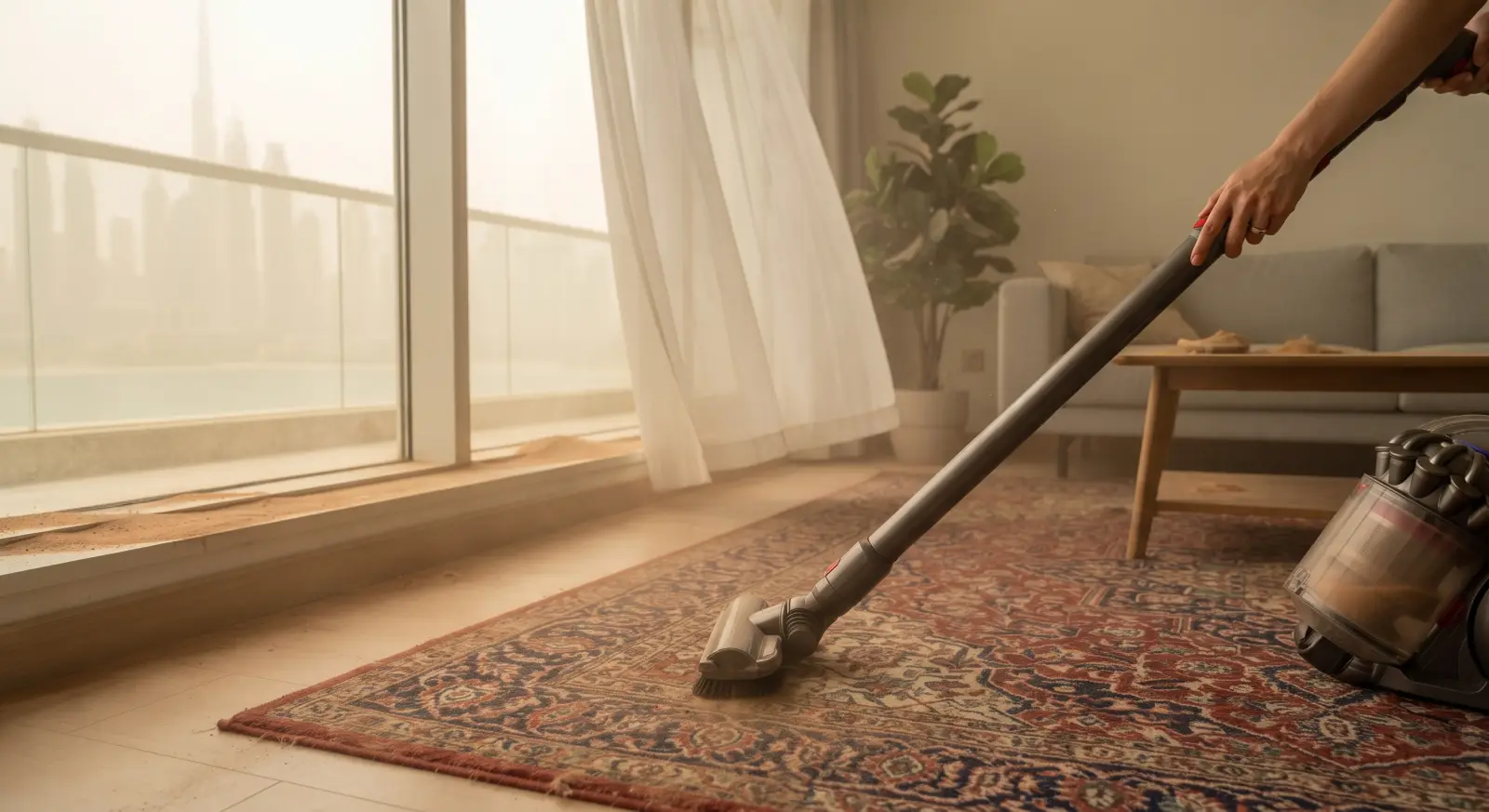
Shut every window in a Dubai flat and the dust still finds a way in. It slips round the balcony slider, rides in on shoes from the car park and lands on the two biggest pieces of fabric in the room: the curtains and the rug. After a dust storm you can see it. The rest of the year it builds quietly, and the first hint is usually a sheer gone the colour of weak tea. Here’s what sand and dust do to both, the upkeep that helps, how often a proper clean makes sense, and what to keep out of your washing machine.
Why Dubai is hard on soft furnishings
The summer wind is the main culprit. NASA’s Earth Observatory describes the shamal as a hot, dry north-westerly that blows almost without a break in summer, often lifting huge clouds of sand and dust. Researchers it cites put the usual season from around 30 May to mid-August. Then there’s the sun. Dubai averages close to ten hours of sunshine a day across the year, and the UV index sits at 11 or above through the hot months. Fabric that faces that light every afternoon has a hard life.
What fine sand does to curtains
Desert dust is far finer than beach sand. It doesn’t sit on top of a curtain. It works its way into the weave and stays there.
- Sheers and voiles. These hang closest to the glass, so they act as a filter for whatever comes through the frame. A white sheer goes beige, then grey, and the open weave holds the dust so tightly that a shake hardly touches it.
- Heavy drapes. Thick cotton, linen and velvet trap dust in the folds. The fabric between the pleats goes darker than the flat panels, and you’ll see a dusty band along the bottom where the curtain brushes the floor.
- Blackout linings. The coated back of a blackout lining picks up a dull film that you can feel with your fingertips. Rub at it too hard, or soak it hot, and that coating can start to crack and flake.
- Grit and wear. Each time you pull a dusty curtain across, the grains rub the threads. Over a few years the leading edge, the part your hand grabs, goes thin.
What fine sand does to rugs
A rug is where the heavier grains end up. They fall off shoes and drift down from the air and sink to the base of the pile, out of reach of a quick vacuum.
The trouble is that sand is sharp. Underfoot it grinds against the fibres where they meet the backing, which is why a hallway runner can look bald in the middle while its corners are still plush.
Keeping on top of dust between cleans
You can’t stop it, but you can stop it settling in for months.
For curtains
- Brush, then vacuum. Run a soft clothes brush down each pleat first to loosen the dust, then follow with the upholstery head on low suction. Work from the rail downwards.
- Do the sheers weekly in the windy months. A light pass keeps them from greying so fast.
- Wipe the track and sill too, or their dust drops straight back on.
- After a dust storm, wait until the air has cleared, then vacuum the curtains before you open the windows or wipe the glass. Drawing them back and forth while they’re full of grit only rubs it in.
For rugs
- Vacuum slowly, in two directions. One pass lengthways and one across lifts more sand than three fast ones. Use suction only, or a soft brush setting, on handmade or fringed rugs.
- Turn it over every few months. Vacuum the back, then the floor where it lay. Much of the grit comes out of the underside.
- Shake the small ones outside. Bath mats, prayer mats and runners can go over a balcony rail or out in the garden. Hold them by the short end and give a few sharp flicks rather than whipping them hard.
- Put a coarse mat outside the door. It catches grit before it reaches the living-room rug.
West-facing windows and sun fading
If your living room catches the sun from mid-afternoon until it sets, that’s where the fading shows first. The colour on curtain folds that face the glass goes pale, and the side of the rug nearest the window loses its depth while the shaded end stays bright.
Slowing it down:
- Keep a lining behind decorative curtains. The lining takes the light so the face fabric doesn’t. Silks and dark velvets fade quickly without one.
- Draw the sheers in the afternoon. Even a thin layer cuts the direct glare on the rug.
- Rotate the rug. Turn it end to end every three months or so, which spreads both the sun and the foot traffic.
How often to get curtains and rugs cleaned in Dubai
No single number fits every home. It depends how close the fabric sits to the window, how busy the room is, and whether there are pets or a dust allergy in the house. A rough guide:
- Sheers and voiles: every three or four months is reasonable, and sooner after a bad storm.
- Lined or blackout curtains in living rooms: roughly twice a year.
- Bedroom curtains in a quieter room: once a year, with regular vacuuming in between.
- Rugs in hallways, living rooms and anywhere children play: every six months or so.
- Rugs in bedrooms and rooms you rarely use: around once a year.
A sensible time to book is the end of the summer, once the windiest stretch is behind you, so the curtains and rugs go into the cooler months clean.
What not to put in a home washing machine
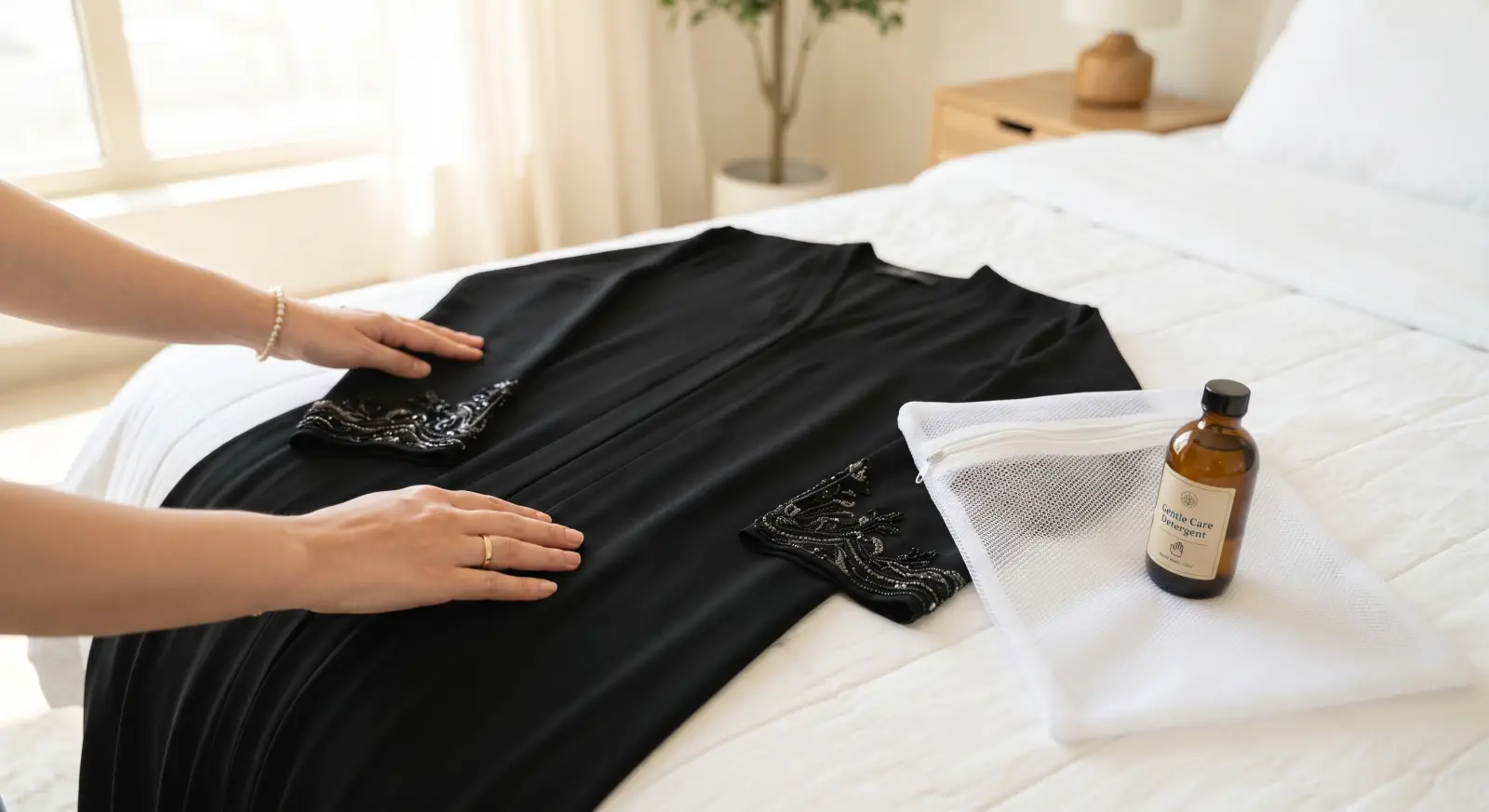
- Lined and interlined curtains. The face fabric and the lining often shrink by different amounts, so the curtain comes out puckered and hangs crooked.
- Blackout curtains, unless the label says otherwise. Heat and spinning can crack the coating.
- Velvet, silk and stiffened pleated headings. The pile crushes, silk marks and the heading loses its shape.
- Wool rugs and handmade rugs. Warm water and agitation felt wool, and strong reds and blues can run into the pale parts of the pattern.
- Rugs with a rubber or latex backing. The backing breaks up in the drum and can leave crumbs through your next few loads.
An unlined cotton curtain or small cotton bath mat marked machine washable is fine. No label at all? Leave it.
When to hand it over
If your sheers have gone grey, the blackout curtains are heavy and lined, or the rug is wool or handmade, let us take it. Our curtain and drape cleaning and carpet and rug cleaning both come with free collection and delivery. Take the curtains down, bag them, roll the rug with the pile facing in, and leave them at the door or with your building’s security desk if it has one. Unsure of the fabric? WhatsApp us a photo.
Quick answers
How often should curtains be cleaned in Dubai?
Sheers about every three or four months, heavier curtains twice a year. Curtains beside a balcony door, or in a home with pets or a dust allergy, need it sooner. Vacuuming the folds every couple of weeks stretches the gap between cleans.
Should you clean curtains after a sandstorm?
Vacuum them first, then decide if they need a full clean. Wait until the dust has settled, brush and vacuum each panel from the top, and wipe the sill and track. If the sheers are still visibly grey after that, the dust is in the weave and a proper clean is the next step.
Can blackout curtains go in the washing machine?
Only if the care label clearly says so. The coating on the back can crack with heat or a hard spin, and a lined blackout curtain can shrink unevenly against its face fabric. When the label is missing or says dry clean, have them cleaned professionally instead of risking the whole set.
How do you get fine sand out of a rug?
Vacuum slowly in two directions, then flip it and vacuum the back. Knocking the underside loosens grit sitting at the base of the pile. Small rugs can be shaken outdoors. When sand keeps coming out however often you vacuum, a deep clean is the only way to get it out of the base.
How do you stop a rug fading in the sun?
Turn it end to end every few months and draw the sheers in the afternoon. In west-facing rooms the low sun hits the floor for hours, so the window side of the rug fades first. Cleaning removes dust that dulls the colour but cannot restore faded dye.