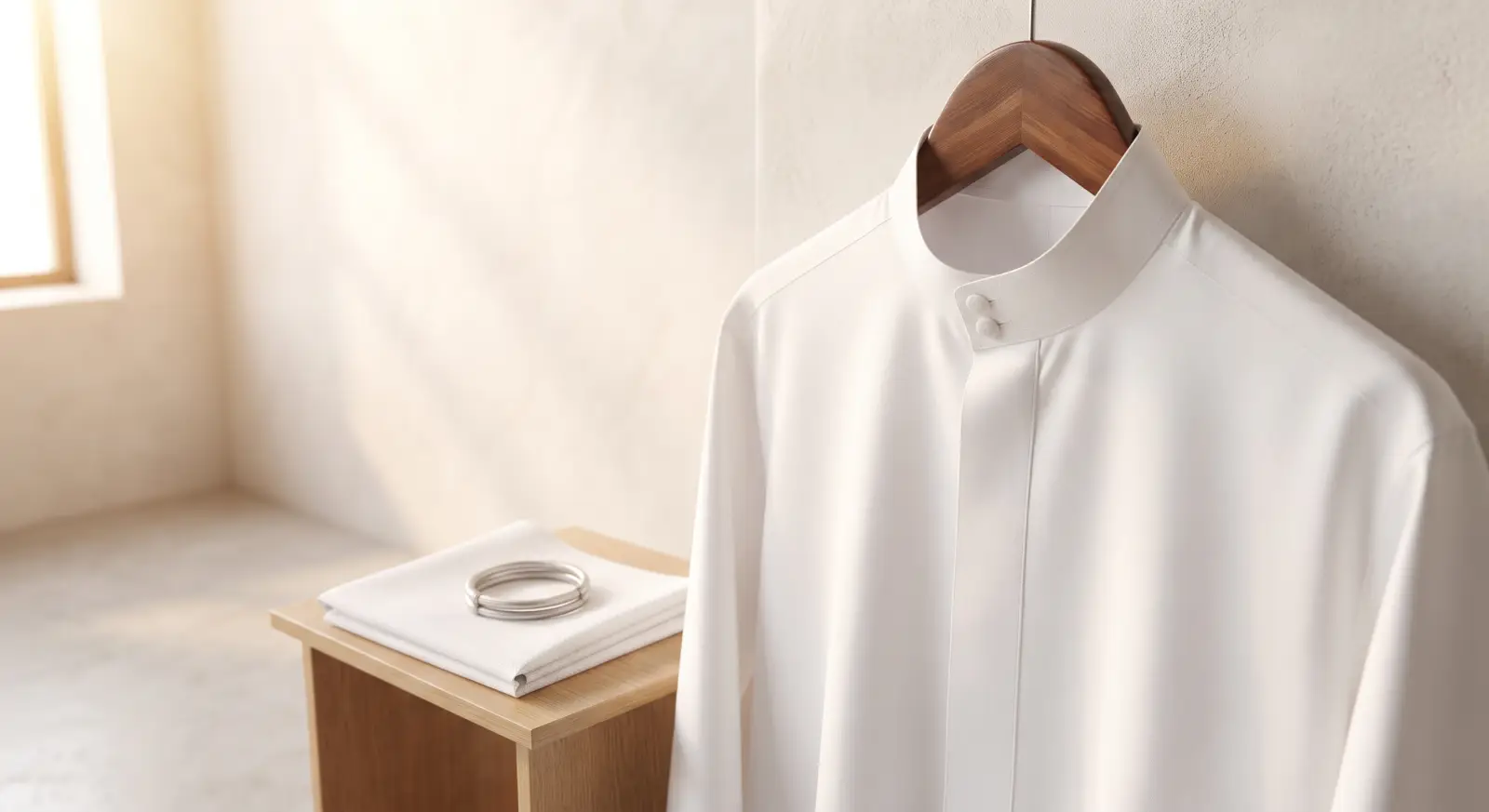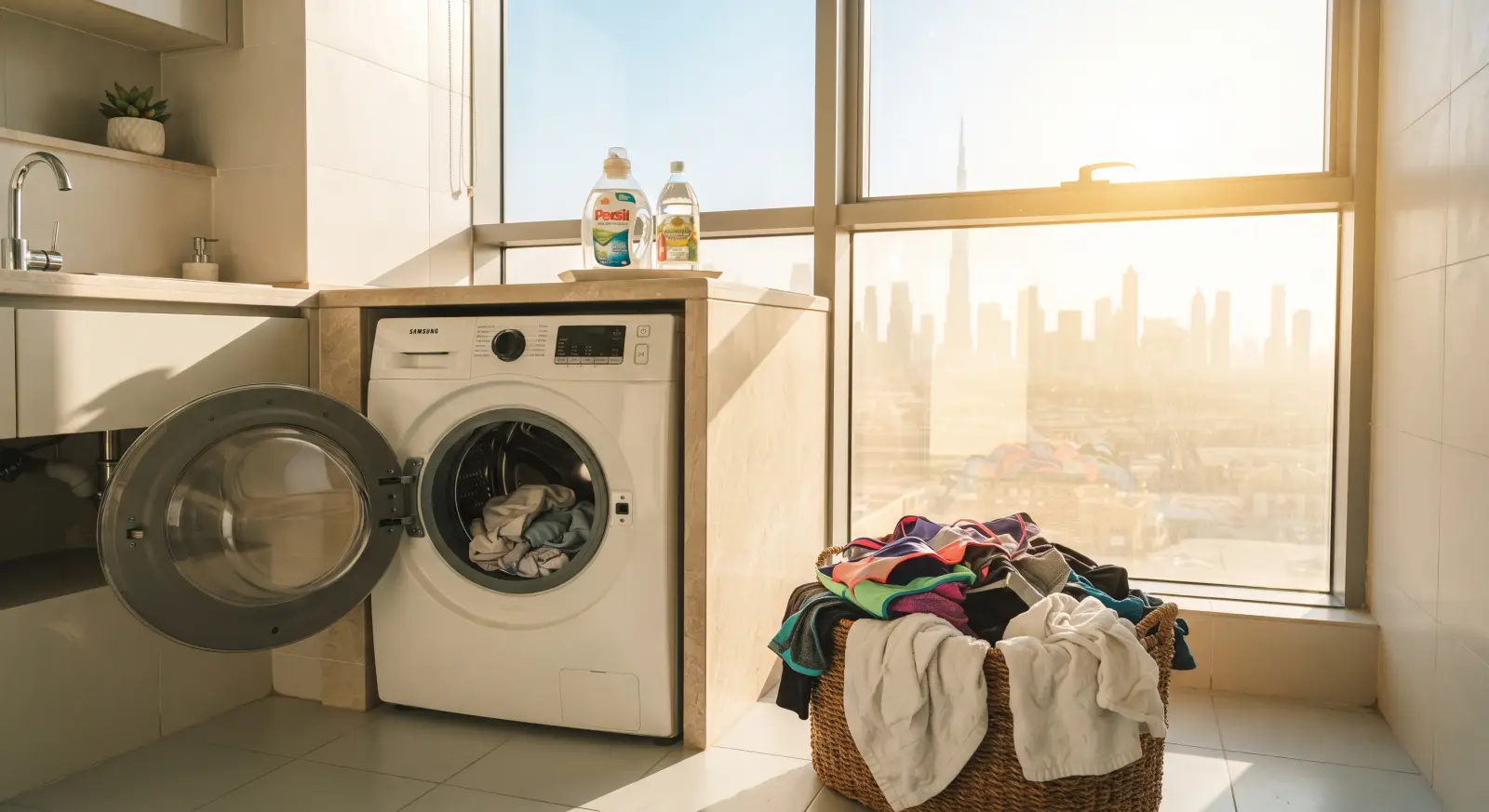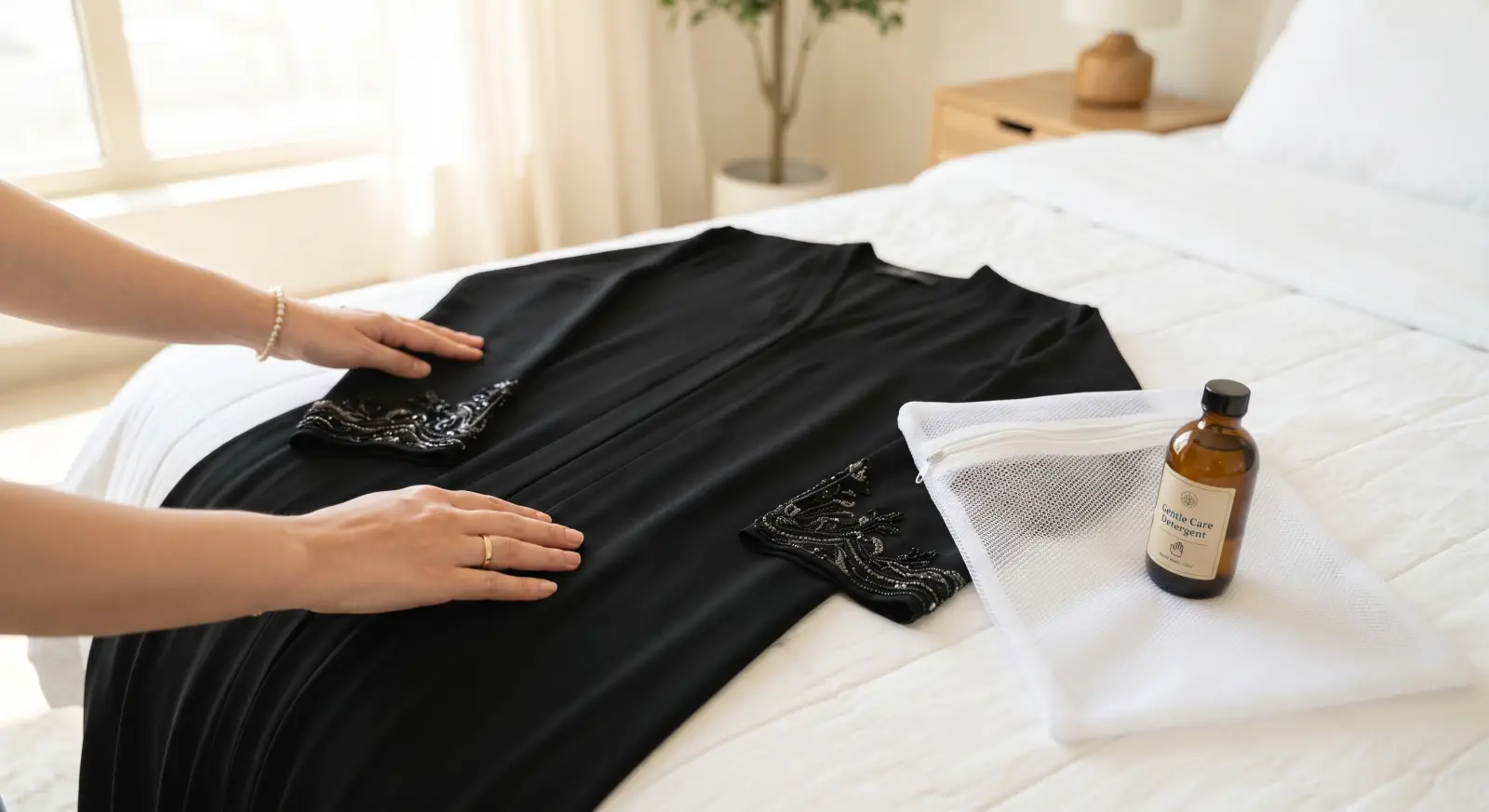
An abaya looks like a simple garment until you’ve had one come out of the machine a shade lighter, or with a sleeve of crystals that’s now missing three. Knowing how to wash an abaya properly is mostly about two things: the fabric it’s cut from, and whatever has been stitched or glued onto it. Get those right and a good one will hold its colour and its fall for years.
Start with the fabric, then read the label
Nida
Nida is a lightweight polyester with a soft, slightly matt face and a fluid hang. It shrugs off creases but hates heat. Warm water, a hot dryer or a heavy iron can leave it shiny in patches, and that shine doesn’t wash back out. Cold water, a gentle hand and no fabric softener are what keep it looking new.
Crepe
Crepe has a fine crinkled grain that gives it body. Polyester crepe copes with a careful cool wash. Crepe with silk or viscose in the blend is fussier: it can shrink a little and lose that grainy texture if it’s soaked and wrung. If the label lists viscose, treat it as delicate.
Chiffon and georgette
Both are sheer, light and loosely woven, which means they snag on anything: a zip, a hook, a ring, the drum of a machine. Georgette is a touch heavier than chiffon; both fray at the seams if tugged while wet.
Linen
Linen abayas breathe well in the heat and get softer with each wash. They also crease the moment you look at them and can shrink on a first hot wash. Cool water and drying on a hanger save you a lot of work with the steamer later.
Read the label before any of this
A tag with a hand in a tub means hand wash. A circle on its own means the maker wants professional cleaning. A circle with a cross means no dry cleaning. When the label and this guide disagree, follow the label.
Keeping black from fading or going rusty
Black is the hardest colour to keep. A faded abaya rarely goes grey; it goes a dull brownish or reddish tone, the one people call rusty.
- Sunlight. UV breaks down black dye faster than almost anything. Dubai’s July and August averages sit around 43°C, and an abaya left on a balcony rail for an afternoon gets a strong dose.
- Warm water. Every degree above cool lets a little more dye loose. Wash at 30°C or below.
- The wrong detergent. Powders with optical brighteners are made to make whites look whiter. On black they leave a faint haze. Use a liquid made for darks or delicates.
- Deodorant and perfume. Sprays with alcohol and aluminium salts mark the underarms and neckline, and that patch fades first. Let them dry fully before you dress.
- Too many washes. If an abaya isn’t marked or smelling, it often only needs airing and a light steam. Each wash costs it some colour.
Embellishment, beading and embroidery
Decoration changes the rules. A plain nida abaya might be fine on a delicate cycle; the same one with a beaded cuff is not.
- Sewn beads and sequins survive a careful hand wash if the thread is sound. Check for loose ones first; one weak stitch can drop a whole row once it’s wet and heavy.
- Glued stones and crystals are the risky ones. Water and heat soften the adhesive, and they slide off or leave a cloudy mark behind. Keep these out of water entirely.
- Embroidery can pucker if the backing shrinks at a different rate from the cloth, and metallic thread can tarnish. Machine agitation pulls loops and catches threads.
- Lace panels and trims snag easily and can bleed if they’re a different colour from the body.
If a decorated piece says professional clean, believe it: the maker knows how the trim was attached.
Hand wash, machine or dry clean?
Hand wash suits plain nida, polyester crepe and linen. Fill a basin with cool water, dissolve a small amount of mild liquid detergent, then put the abaya in inside out. Press it up and down gently for a few minutes. Don’t scrub, twist or wring. Rinse in clean cool water until it stops feeling soapy, then squeeze the water out by rolling it in a dry towel.
Machine wash is fine for plain, sturdy pieces where the label allows it. Use a mesh laundry bag, the delicate or hand-wash programme, cold water and the lowest spin. Close any zips and poppers first so nothing catches.
Professional cleaning is the safer call for chiffon and georgette layers, anything with glued stones, heavy embroidery or lace, silk or viscose blends, and any abaya that’s precious to you. So are marks you can’t identify: warm water at home can set them for good.
Drying out of the sun
Never tumble dry an abaya. Heat and tumbling fade black, shine nida and loosen trims.
Hang it on a broad, padded hanger so the shoulders don’t stretch into points. Pull the seams straight while it’s damp and let the weight of the cloth do the rest. Dry it indoors or in full shade with air moving around it. In a Dubai summer, when humidity runs high, a fan or the air conditioning helps it dry before it starts to smell musty.
Steaming or ironing?
A handheld steamer is the gentler choice for most abayas. Hold it a few centimetres off the fabric and work from the top down. Nida and chiffon in particular relax under steam without being flattened.
If you do iron, set it to the lowest heat the label allows, turn the abaya inside out, and put a cotton cloth between the iron and the fabric. Never press straight onto beading, sequins or stones. Linen is the exception that likes a higher setting and a bit of dampness.
Storing it well
- Keep abayas on padded or wooden hangers, not thin wire ones.
- Use breathable cotton garment bags. Plastic traps damp, which matters in a humid flat.
- Fold heavily beaded pieces flat with tissue between the layers instead of hanging them, so the weight doesn’t drag the shoulders.
- Make sure anything you store is clean. Old perfume and body oils yellow and weaken fabric over time.
When to hand it over
If an abaya has crystals, embroidery, lace or a sheer outer layer, or you simply don’t want to gamble with it, our dry cleaning service in Dubai cleans each piece the way its fabric needs and steam presses it before it comes back on a hanger. Embellished ones are priced on their own line. If it’s already clean and just creased from the wardrobe, the ironing service does the steam finish alone.
Collection and delivery are free, the minimum order is AED 75, and you can book on WhatsApp. Before the bag goes out, take off any brooches or pins and tell us about any marks and what made them.
Quick answers
Can you put an abaya in the washing machine?
Yes, if it’s plain and the label allows it. Use a mesh bag, a cold delicate programme and the lowest spin. Keep anything with glued stones, heavy embroidery, lace or a chiffon layer out of the machine, because agitation snags threads and loosens trims.
How do I wash a black abaya without it fading?
Wash it cold, inside out and on its own. Use a liquid detergent for darks with no optical brighteners, skip the fabric softener, and dry it in the shade. Washing less often helps too: air and steam it between wears when it isn’t actually dirty.
Why has my black abaya turned brown or rusty?
That’s usually sun, heat or detergent breaking down the black dye. Drying in direct sunlight, warm washes, brightening powders and deodorant residue all strip it. Once the dye has gone it can’t be fully brought back, so prevention matters more than any home fix.
Can you iron a nida abaya?
You can, but steaming is safer. Nida is a polyester that goes shiny under a hot iron. If you iron, use the lowest setting, work inside out and put a cotton cloth between the iron and the fabric.
How do you wash an abaya with beads or stones?
Check how they’re attached first. Sewn beads can take a gentle cool hand wash inside out. Glued stones and crystals shouldn’t get wet at all, because water and heat soften the glue, so those pieces are better professionally cleaned.
Should abayas be dry cleaned?
Not all of them. Plain nida, polyester crepe and linen usually hand wash well. Silk or viscose blends, chiffon and georgette layers, and anything embellished are safer with a professional clean, and so is any piece whose label shows a plain circle.