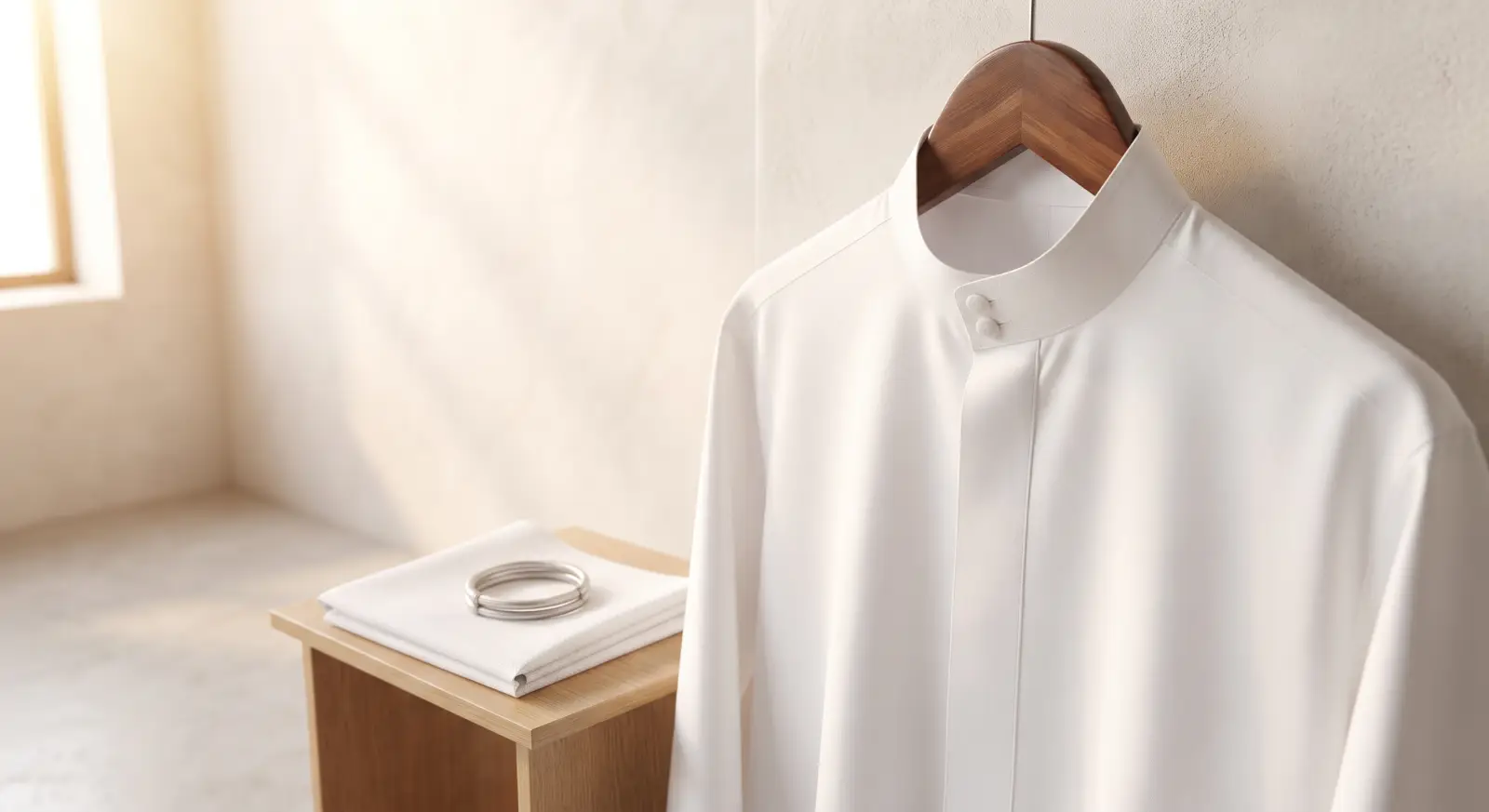
A white kandura rarely goes yellow overnight. It drifts there, a shade at a time, until one morning you hold it next to a new one and see the difference. Each cause of that drift is something you can control. Here’s how to keep a white kandura white: what dulls the cloth, how we’d wash and dry it, and how to get the collar and cuffs sharp again.
The same advice holds if you call it a dishdasha or a thobe. The name changes from country to country; the white fabric behaves the same way.
Why white kanduras turn yellow or grey
Yellow and grey come from different places, so work out which one you have before buying another whitener.
Yellow at the collar, cuffs and underarms
This is body chemistry meeting heat. Sweat and skin oil soak into the neckband and cuffs every time the garment is worn, and in a Dubai summer that happens fast. Leave a trace behind, iron over it, and the oil oxidises into a yellow band that darkens with every press.
Antiperspirant adds to it. Products that contain aluminium salts bind with sweat and leave a waxy, faintly yellow patch under the arms that ordinary washing struggles to shift.
Yellow patches from perfume and oud
Perfume oils and oud are oils first and fragrance second. Dabbed on the chest or sleeve, they sit in the fibres unseen until a few washes and a hot iron leave a pale ring exactly where the scent went. Put it on your skin and let it settle a minute before you dress.
Grey all over
Greying is a laundry problem, not a wearing one. The usual culprits:
- Too much detergent. It doesn’t rinse out, and the film it leaves attracts dirt on the next wear.
- A crowded drum. The water can’t move through the cloth, so loosened dirt settles back on.
- Mixing loads. One pale grey T-shirt or a pair of light jeans in with the whites is enough to tint them slowly.
Yellow from bleaching too often
This one surprises people. Chlorine bleach can turn synthetic and blended fabrics yellow and weakens cotton. Bleached every week, a kandura ends up looking worse, with the cloth thin and stiff along the seams.
How to wash a white kandura
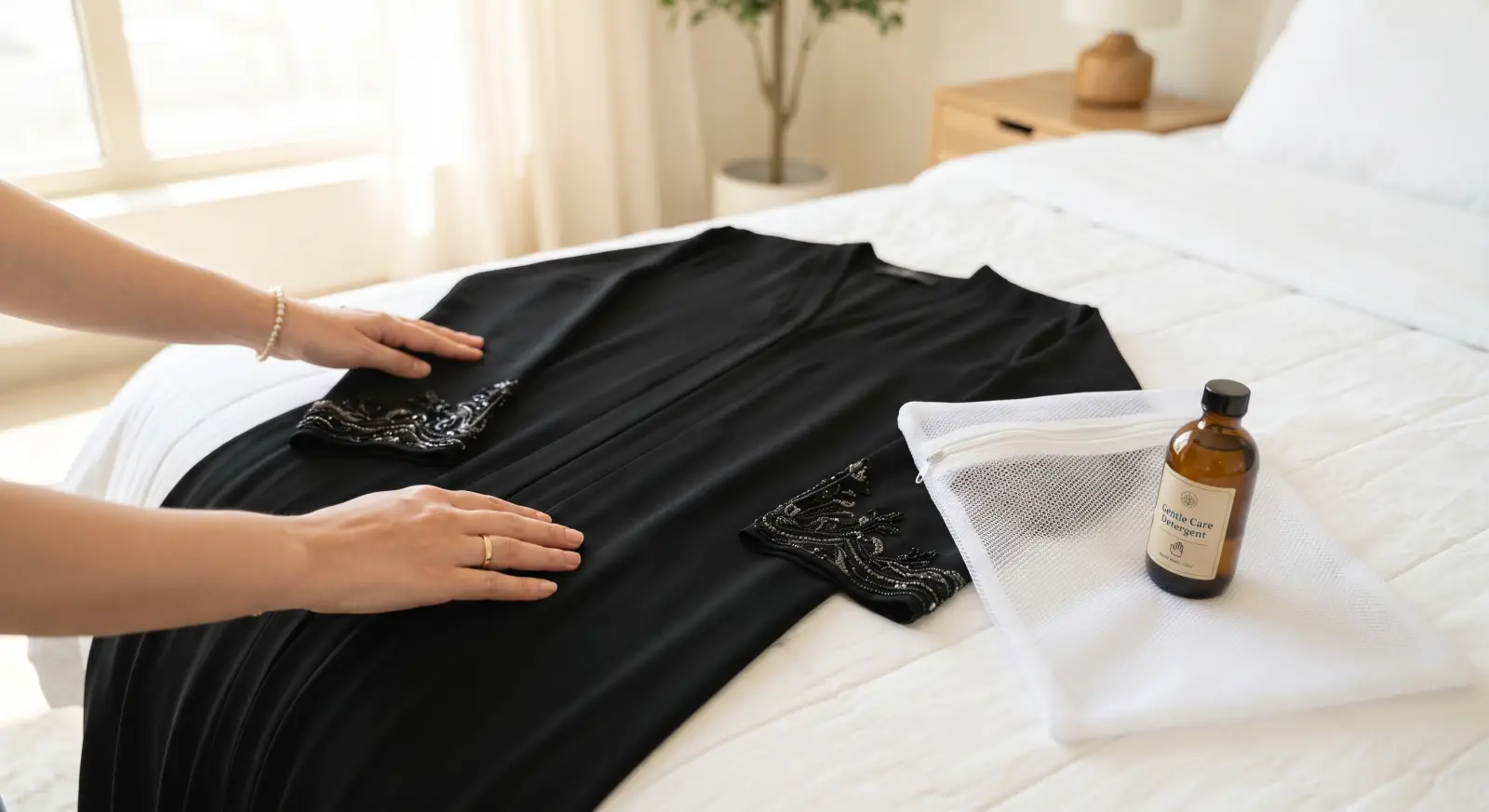
Check the care label first. Kanduras come in polyester, blends and cotton, and the label decides the temperature and whether the machine is allowed at all. For a standard washable one, this is our routine:
- Treat the collar and cuffs before they go in. Work a little liquid detergent into the neckband and cuff edges with your fingers or a soft toothbrush, and leave it for fifteen minutes or so.
- Turn it inside out. That protects the outer face and puts the inside of the collar where the water reaches it best.
- Wash whites on their own. No pale colours, no “nearly white” items.
- Keep it cool. Thirty to forty degrees is plenty. Hotter water can set sweat stains and shrink cotton.
- Use a measured dose of detergent, not a generous one. Less soap and a full rinse beats more soap and a short one.
- Add an extra rinse if your machine has one. It’s the cheapest whitener there is.
- Don’t pack the drum. Two or three with room to move come out cleaner than five squeezed in.
If a kandura has already gone dull, an oxygen-based whitener, the kind sold for white laundry, is far kinder than chlorine. Follow the dose on the tub and test it on an inside seam first.
How to dry it without losing the white
Skip the tumble dryer. Its heat bakes in any sweat or deodorant you missed. Give the kandura a shake and hang it straight from the machine on a wide hanger, front buttoned, so it dries in shape. A summer balcony dries it fast, but hours of strong sun can turn some fabrics faintly yellow, so bring it in once it’s dry or hang it in the shade.
Pressing a crisp finish, collar and cuffs included
A kandura shows every wrinkle, so this is where the effort shows.
- Iron while it’s still slightly damp. The steam does half the work and the fabric lies flat with less heat.
- Match the heat to the fabric. Polyester needs a cooler iron than cotton. Too hot and it can scorch to a yellow sheen.
- Start with the collar. Press the underside first, then the outside, working from the points into the middle so creases don’t get pushed to the tips.
- Cuffs next, opened flat. Do the inside, then the outside, then fold and press the edge.
- Then the placket, pressed dead straight, because a kink there is the first thing anyone notices.
- Finish with the long panels, front, back, then the sleeves.
A light spray starch on the collar and cuffs gives that sharp edge. Use it sparingly. Heavy starch makes the collar brittle and, ironed in over and over, can leave a dull build-up of its own.
How many kanduras to keep in rotation
Worn once in the heat, a kandura needs washing. So count the days you wear one in a week, add the days between wash days plus one for drying and pressing, then keep one spare for a sudden occasion. Rotating spreads the wear too: five or six washed in turn stay white longer than two washed twice as often. Store spares in a cotton bag, away from a sunny window, never sealed in plastic.
When a professional clean and press is worth it
Some jobs are better handed over:
- A collar that’s already gone yellow after your own treatments.
- Perfume or oud marks that have been ironed over.
- Finer fabrics with a label that says dry clean or professional care.
- An occasion where it has to be perfect: a wedding, a family dinner, an interview.
- Weeks when you simply don’t have time to iron five long garments.
Our clean and press service is for the worn, marked or delicate ones. Each kandura is looked at by hand, stains are dealt with before cleaning and it returns hanging, not folded. If you’ve washed them at home and only need the creases out, pressing is the cheaper route. Tell us in the booking about any yellow patch or scent mark and what you’ve already tried on it.
We pick up and drop back at no charge, orders start at AED 75, and one WhatsApp message books it. If a kandura is needed the same day, our express service collects, cleans and returns it within 5 hours when it’s booked before 2 PM in the main areas of Dubai. The full list is on the prices page.
Quick answers
Why does my white kandura turn yellow?
Usually from sweat, skin oil or deodorant left in the fabric and then heated. The collar, cuffs and underarms go first, and every press over a leftover trace deepens the colour. Perfume oil on the cloth does the same.
Can I use bleach on a white kandura?
Avoid chlorine bleach on a kandura. It can turn polyester and blended fabrics yellow and weakens cotton fibres over time, so regular bleaching makes whites look worse. If one has gone dull, use an oxygen-based whitener at the dose on the pack, and test it on an inside seam first.
What temperature should I wash a kandura at?
Thirty to forty degrees suits a standard washable kandura. Warm enough to lift sweat from a pre-treated collar, cool enough not to set stains or shrink cotton. The care label has the final word.
Can a kandura go in the tumble dryer?
Better not. Dryer heat bakes leftover sweat into the fabric. Hang it on a wide hanger, out of hours of strong sun, and iron it while still a little damp.
How do I get the collar of a kandura crisp?
Press it while slightly damp, underside first, working from the points inward. A light mist of spray starch gives a firm edge. Go easy with it, though: heavy starch makes the collar brittle and can crack along the fold.
How often should a kandura be washed?
After every wear in warm weather. Sweat sitting in the cloth for days is what yellows it, and the longer it stays, the harder it is to move.